Neidan (Chinese Internal Alchemy) in Tradition & Xianxia Cultivation
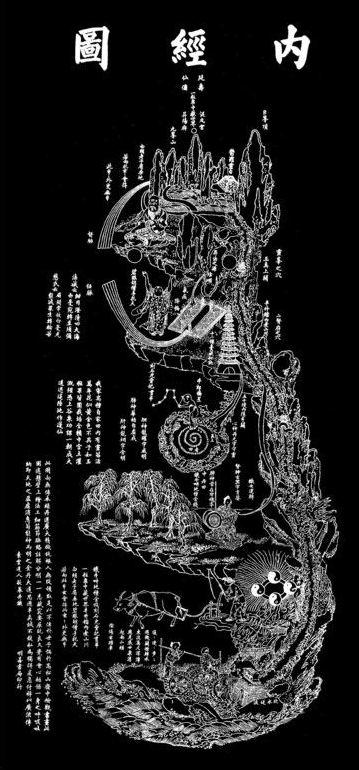
Neidan (内丹, pronounced “nay-dahn”) is the Daoist practice of refining qi inside the body to produce a spiritual elixir of immortality. Where external alchemy (waidan / 外丹) sought literal elixirs in furnaces – often poisoning practitioners with mercury and lead – internal alchemy moved the furnace inward. The practitioner’s body became the crucible, their qi the ingredients, and their dantian the cauldron. Neidan is the historical practice that gave xianxia its entire cultivation framework: realm progression, golden cores, nascent souls, and the pursuit of immortality through self-refinement.
What Is Neidan?
The Chinese nèidān combines nèi (内, “inner, internal”) and dān (丹, “elixir, cinnabar”). The complementary practice is wàidān (外丹, “external alchemy”), which involved literal laboratory alchemy. The shift from waidan to neidan – roughly completed by the Tang dynasty (618–907 CE) – was one of the most important transitions in Chinese religious history, redirecting Daoist practice from metallurgy to meditation.
Neidan is structured around a three-stage refinement cascade that produces progressively subtler substances within the practitioner’s body:
| Stage | Chinese | Pinyin | What is refined | Result |
|---|---|---|---|---|
| 1 | 炼精化气 | liàn jīng huà qì | Essence (精) into qi (氣) | Basic vital energy |
| 2 | 炼气化神 | liàn qì huà shén | Qi into spirit (神) | Refined consciousness |
| 3 | 炼神还虚 | liàn shén huán xū | Spirit into the void (虚) | Return to Wuji |
| 4 | 炼虚合道 | liàn xū hé dào | Void unifies with the dao | Ultimate union |
This cascade is the direct ancestor of the xianxia cultivation realm hierarchy. The transition from Qi Refining to Foundation Establishment to Core Formation to Nascent Soul mirrors neidan’s stages almost exactly – a correspondence that becomes clearer when reading Tang and Song dynasty internal alchemy texts (Wikipedia: Neidan).
Historical Origin
From Waidan to Neidan (Han to Tang Dynasty)
Early Daoist alchemy was external. Practitioners – including imperial alchemists sponsored by Han and Tang emperors – sought to compound an immortality elixir from minerals, particularly cinnabar (mercury sulfide), gold, and jade. The result was catastrophic: multiple Tang emperors died from elixir poisoning, and external alchemy’s credibility collapsed.
The shift to internal alchemy did not happen overnight. Han dynasty texts already described meditative practices that visualized internal qi circulation. The Huangdi Neijing (黄帝内经, Yellow Emperor’s Inner Canon, ~2nd century BCE) mapped the body’s qi system. But these were medical frameworks, not alchemical ones.
The critical synthesis came in the Tang dynasty with Shangyangzi (上阳子) and other Daoist reformers who proposed that the “elixir” could be produced internally – that the body itself was the furnace, and the practices of breath control, meditation, and qi circulation were the alchemical process. This reframing saved Daoist practice from the literal-poisoning problem while preserving the alchemical vocabulary.
The Song Dynasty Synthesis
Internal alchemy reached its mature form during the Song dynasty (960–1279 CE), particularly through the Quanzhen (全真, “Complete Reality”) lineage founded by Wang Chongyang (王重阳, 1113–1170). Quanzhen Daoism synthesized Buddhist meditation techniques, Confucian ethics, and Daoist alchemy into a coherent system. Its core practice was neidan, and its texts became canonical:
- Wuzhen Pian (悟真篇, “Awakening to Reality”) by Zhang Boduan (张伯端, 984–1082) – the foundational text of internal alchemy
- Cantong Qi (参同契, “The Kinship of the Three”) – originally a Han-era waidan text, reinterpreted as a neidan manual
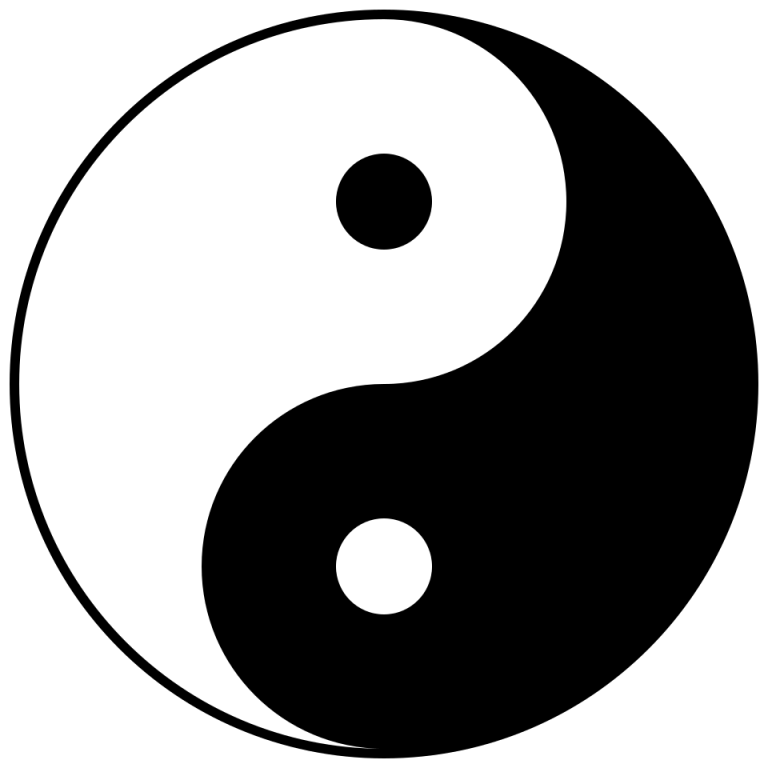
- Taijitu Shuo (太极图说) by Zhou Dunyi – linked neidan to the broader cosmological cascade (Wuji -> Taiji -> Yin-Yang -> Bagua)
By the Ming and Qing dynasties, neidan had become the dominant Daoist cultivation practice, with hundreds of manuals, lineages, and variations. The Quanzhen lineage survives today as one of the two major Daoist schools, alongside the Zhengyi (正一) tradition.
Core Principles
The Three Treasures (三宝 / Sānbǎo)
Neidan organizes its practice around the cultivation of three substances in the body, collectively the Three Treasures:
| Treasure | Chinese | Pinyin | What it is | Where it’s stored |
|---|---|---|---|---|
| Essence | 精 | jīng | Inherited vital substance (genetic + reproductive) | Kidneys / lower dantian |
| Qi | 氣 / 气 | qì | Vital energy flowing through meridians | Throughout body / dantian |
| Spirit | 神 | shén | Consciousness, awareness, soul | Upper dantian (head) |
The three-stage refinement cascade transforms these in sequence:
- Stage 1: Refine essence into qi (炼精化气) – The practitioner conserves and transforms reproductive essence (jing) into usable qi. This is the foundational practice, often involving celibacy or regulated sexuality, dietary discipline, and breath work.
- Stage 2: Refine qi into spirit (炼气化神) – The accumulated qi is further refined into spirit, expanding consciousness and preparing the practitioner for spiritual transcendence.
- Stage 3: Refine spirit into the void (炼神还虚) – The spirit itself dissolves into Wuji, the undifferentiated void.
- Stage 4: Refine the void into the dao (炼虚合道) – Ultimate union with the cosmic principle.
This cascade is the direct source of the xianxia cultivation realm system. The progression from Qi Refining to Foundation Establishment to Core Formation to Nascent Soul to Soul Formation maps almost one-to-one onto neidan’s stages.
The Microcosmic and Macrocosmic Orbits
Neidan practice centers on two qi circulation techniques:
- Microcosmic Orbit (小周天 / xiǎo zhōutiān, “small heavenly circuit”): Qi circulates through the Conception Vessel (front midline, 任脉) and Governing Vessel (back midline, 督脉), forming a complete loop. This is the foundational practice.
- Macrocosmic Orbit (大周天 / dà zhōutiān, “great heavenly circuit”): Qi circulates through all twelve primary meridians, achieving full-body qi saturation. This is an advanced state.
In xianxia, the protagonist “completing the small circulation” or “achieving great circulation” is a direct reference to these neidan stages – usually a Foundation Establishment or Core Formation milestone.
The Three Dantian
Neidan practice explicitly works with the three energy centers:
- Lower dantian (下丹田, below navel) – stores essence and qi; primary cultivation site
- Middle dantian (中丹田, chest) – refines qi into spirit
- Upper dantian (上丹田, between eyebrows) – houses spirit and connects to consciousness
See the dantian glossary entry for the full anatomical and energetic framework.
How Neidan Functions in Real Chinese Culture
Quanzhen Daoist Monasticism
The Quanzhen lineage operates Daoist monasteries today where monks and nuns practice neidan as a living tradition. The famous White Cloud Temple (白云观) in Beijing is the historical headquarters. Monks undertake years of meditation, breath practice, and ethical discipline following the neidan cascade. Wudang Mountain and Mount Qingcheng are other major active centers.
Qigong and Modern Practice
Modern qigong practice is descended from neidan. The simplified standing-meditation forms taught in parks and community centers worldwide trace back to internal alchemy. The “Eight Pieces of Brocade” (八段锦, bāduànjǐn) and other qigong sets are accessible modernizations of neidan exercises.
Traditional Chinese Medicine
TCM theory draws heavily on neidan’s framework. The Three Treasures (essence, qi, spirit) appear in TCM diagnosis: a physician might identify “qi deficiency” or “spirit disturbance” and prescribe treatments aimed at restoring balance. The meridian system and acupuncture points that TCM uses are the same ones neidan cultivates.
Martial Arts
Internal martial arts – particularly taijiquan (太极拳), xingyiquan (形意拳), and baguazhang (八卦掌) – explicitly use neidan principles. The famous “inner strength” (内力 / nèilì) of wuxia novels is the fictional expression of neidan-trained martial power.
How Xianxia Novels Use Neidan
Xianxia is, in essence, neidan made spectacular. The genre’s relationship to the historical practice is unusually close:
Realm Hierarchy = Neidan Stages
| Xianxia realm | Neidan stage |
|---|---|
| Qi Refining (炼气期) | Refine essence into qi (炼精化气) |
| Foundation Establishment (筑基期) | Foundation practices; opening dantian and meridians |
| Core Formation / Golden Core (结丹期 / 金丹) | The “inner elixir” (neidan) literally forms |
| Nascent Soul (元婴期) | The elixir matures into a “spiritual embryo” |
| Soul Formation (化神期) | Refine qi into spirit (炼气化神) |
| Void Refinement (炼虚期) | Refine spirit into void (炼神还虚) |
| Body Integration (合体期) | Refine void into dao (炼虚合道) |
The names overlap so precisely that xianxia authors are clearly borrowing neidan’s vocabulary directly. Even the term neidan itself appears in novels – “the protagonist formed his neidan” is functionally equivalent to “the protagonist reached Core Formation.”
The Golden Core as Literal Elixir
In neidan, the practitioner visualizes forming an “inner elixir” (neidan) in the lower dantian. Xianxia literalizes this: the golden core is a real, attackable, harvestable object inside the body. This literalization is the genre’s signature move – taking the meditative visualization and making it physical.
The Spiritual Embryo
Neidan texts describe the highest stage as the formation of a “spiritual embryo” (圣胎 / shèngtāi) or “immortal fetus” (仙胎 / xiāntāi) – a figurative description of the refined spirit that survives bodily death. Xianxia’s nascent soul (元婴 / yuányīng) is this exact concept made literal: a tiny humanoid figure that grows in the dantian and eventually leaves the body.
Visualization Made Visible
Neidan practice involves elaborate visualizations – circulating qi through specific channels, imagining luminous spheres in the dantian, etc. Xianxia makes these visualizations physically real. A cultivator doesn’t just imagine the qi sphere; the sphere is visible to spiritual sense, can be damaged, and can be used as a weapon.
Where Xianxia Diverges from Neidan
Several systematic differences:
| Real neidan | Xianxia |
|---|---|
| Decades of meditation per stage | Months to years per stage (protagonist speed) |
| No combat applications | Combat is the central activity |
| Monastic celibacy and discipline | Often active social/romantic lives |
| Goal: spiritual liberation | Goal: power, revenge, immortality |
| Quiet failure (no progress) | Spectacular failure (qi deviation, demonic conversion) |
| Alchemy as metaphor | Alchemy as literal organ formation |
The genre takes the framework of neidan and inflates its drama. Real internal alchemists sit in meditation for years; xianxia cultivators sit for years but emerge with cosmic power. The shared vocabulary is what makes the genre feel culturally grounded.
Neidan and the Cosmological Cascade
Neidan explicitly connects to the Daoist cosmological sequence described in our Yin-Yang article:
Wuji (无极) → Taiji (太极) → Yin-Yang (阴阳) → Bagua (八卦) → Wanwu (万物)
Neidan practice is the reverse of this cascade. A mortal is one of the “ten thousand things” – fully differentiated, finite. Through cultivation, the practitioner retraces the cascade backward:
- Mastering a specific dao (bagua-level specialization)
- Integrating yin and yang (fusion techniques, dual cultivation)
- Comprehending Taiji (holding opposites in unity)
- Returning to Wuji (transcending duality)
- Merging with the Heavenly Dao
This is why neidan is described as “returning” – the practitioner is going backward through cosmic emergence, undoing differentiation to reach the unified source.
Common Misconceptions
“Neidan is just meditation.” No. Neidan includes meditation, but also breath practices (调息), dietary regimens, ethical discipline, sexual practices (in some lineages), and physical exercises. It is a comprehensive life practice, not just a meditation technique.
“Neidan practitioners actually achieve immortality.” The historical record does not support literal physical immortality. The “immortality” of neidan is best understood as spiritual liberation – a state of consciousness that transcends ordinary identification with the body. Practitioners still die physically; what they claim to achieve is a continuity of consciousness beyond death.
“Xianxia cultivation is neidan.” Xianxia borrows neidan’s vocabulary and framework but not its practice. Real neidan does not produce combat power, golden cores, or flying swords. The genre takes the metaphors and makes them literal. Reading xianxia as a guide to real neidan would be like reading Star Wars as a guide to real Buddhism.
“Neidan is uniquely Chinese.” Internal alchemy has parallels in Indian yoga (kundalini), Tibetan Buddhist practices (tummo), and Western esoteric traditions (Hermeticism). The Chinese version is distinctive in its alchemical vocabulary and its integration with TCM meridian theory, but the underlying concept of internal energy cultivation is cross-cultural.
Further Reading
- Neidan – Wikipedia – comprehensive overview
- Chinese Alchemy – Wikipedia – context for waidan-to-neidan transition
- Quanzhen School – Wikipedia – the living lineage
- Wuzhen Pian – Wikipedia – foundational text
- Pregadio, Fabrizio. The Seal of the Unity of the Three: A Study of the Cantong Qi. Golden Cup Press, 2011 – academic translation of the foundational neidan text
- Pregadio, Fabrizio (ed.). The Encyclopedia of Taoism. Routledge, 2008 – standard reference
- Kohn, Livia. Daoist Meditation: The Purification of the Heart Method. Three Pines Press, 2010
See Also
- Cultivation Realms Explained – how neidan stages map to xianxia realms
- Daoism in Xianxia – the religious tradition neidan belongs to
- Yin and Yang – the cosmological cascade neidan reverses
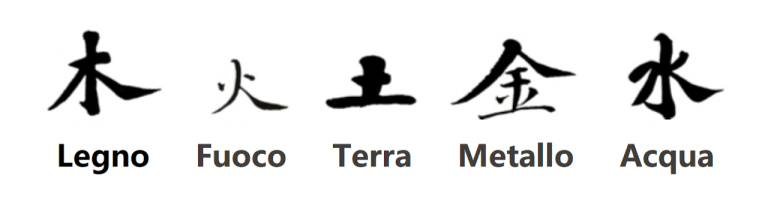
- Five Elements – the elemental framework neidan incorporates
- Golden Core – the literalized neidan object
- Nascent Soul – the literalized spiritual embryo
- Dantian – the body’s energy centers neidan cultivates
- Wuji – the void neidan’s final stage returns to
Sources:
– Neidan – Wikipedia
– Chinese Alchemy – Wikipedia
– Quanzhen School – Wikipedia
– Wuzhen Pian – Wikipedia
– Three Treasures (Traditional Chinese Medicine) – Wikipedia
– Qigong – Wikipedia
– Pregadio, Fabrizio (ed.). The Encyclopedia of Taoism. Routledge, 2008.
– Kohn, Livia. Daoism and Chinese Culture. Three Pines Press, 2001.
– Robinet, Isabelle. Taoism: Growth of a Religion. Stanford University Press, 1997.