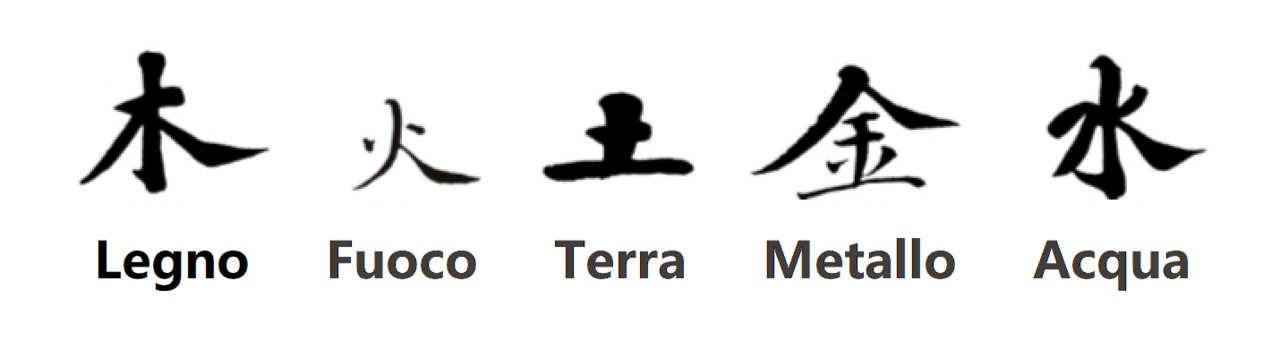
Five Elements (Wuxing) in Chinese Tradition & Xianxia Novels
The Five Elements — wood, fire, earth, metal, and water — are the conceptual framework Chinese cosmology uses to describe how everything in the universe interacts. Known in Chinese as Wuxing (五行, “five movements” or “five phases”), the system explains medicine, music, calendars, politics, and — in xianxia novels — the elemental affinities of spiritual roots, the categorization of dao paths, and the mechanics of half the genre’s combat techniques.
What Are the Five Elements?
Wuxing is not a list of physical substances — it is a framework of five dynamic phases of energy and transformation. Each phase has associations with seasons, organs, colors, directions, emotions, and dozens of other categories. The five interact through cycles of generation (one element produces another) and overcoming (one element controls another), which together describe how change happens in the world.
The five phases:
| Element | Chinese | Pinyin | Color | Season | Direction |
|---|---|---|---|---|---|
| Wood | 木 | Mù | Green | Spring | East |
| Fire | 火 | Huǒ | Red | Summer | South |
| Earth | 土 | Tǔ | Yellow | Late summer | Center |
| Metal | 金 | Jīn | White | Autumn | West |
| Water | 水 | Shuǐ | Black | Winter | North |
This is the standard correspondence. Other systems map the elements to internal organs, musical notes, planets, virtues, and many more — Wuxing is genuinely encyclopedic in Chinese thought (Wikipedia: Wuxing).
Historical Origin
The wuxing concept emerged during the Warring States period (475–221 BCE), with full systematization in the Han dynasty (206 BCE – 220 CE). The most influential early text was Zou Yan‘s (邹衍, ~305–240 BCE) work on the cosmology of cycles, which proposed that dynasties rose and fell according to elemental succession. Later Han Confucian scholars wove Wuxing into a comprehensive cosmology that touched every domain of knowledge.
Three texts cemented the system:
- Huangdi Neijing (黄帝内经, Yellow Emperor’s Inner Canon) — applied Wuxing to medicine; still foundational to traditional Chinese medicine today
- I Ching (易经, Book of Changes) — provided the Eight Trigrams that complement Wuxing
- Chunqiu Fanlu (春秋繁露) by Dong Zhongshu — fused Wuxing with Confucian political theory
By the Tang dynasty (618–907), Wuxing was the default framework for Chinese natural philosophy, medicine, divination, and statecraft. It remains the working framework of traditional Chinese medicine and feng shui to this day.
The Generation Cycle (相生)
The generation cycle (相生 / xiāngshēng, “mutual production”) describes how each element gives rise to the next:
- Wood → Fire: Wood burns to produce fire
- Fire → Earth: Fire produces ash, which is earth
- Earth → Metal: Metal ores are mined from earth
- Metal → Water: Metal cools and condenses water (or melts into liquid)
- Water → Wood: Water nourishes plants, which are wood
The cycle is circular — water generates wood, returning to the start. In real-world applications (medicine, feng shui), this cycle is used to identify how to strengthen something: to strengthen fire-organ functions (the heart, in TCM), nourish the wood-organ functions (the liver) that generate it.
The Overcoming Cycle (相克)
The overcoming cycle (相克 / xiāngkè, “mutual control”) describes how each element restrains another:
- Wood overcomes Earth: Tree roots break up soil
- Earth overcomes Water: Earth dams contain water
- Water overcomes Fire: Water extinguishes fire
- Fire overcomes Metal: Fire melts metal
- Metal overcomes Wood: Metal axes cut wood
This cycle skips one element in the generation order. It describes how balance is maintained — an element that grows too strong will be controlled by the element that overcomes it.
How Xianxia Uses Wuxing
Xianxia novels take the Wuxing framework and apply it as the default elemental system for cultivation. Every standard cultivation novel sorts cultivators into five elemental affinities, each governed by the Wuxing rules.
Spiritual Roots
A spiritual root typically falls into one of five elemental categories — wood, fire, earth, metal, water — matching the cultivator’s natural affinity for that element’s qi. Some cultivators have single-element roots (pure and rare), others have multi-element roots. The classic “trash root” is a five-element mixed root, considered worthless in traditional theory because the elements neutralize each other — though this often becomes a protagonist’s hidden advantage.
Elemental Techniques
A cultivator’s techniques typically match their root’s affinity. A fire-root cultivator’s fireball is far stronger than a water-root cultivator’s fireball, even if both technically know the same technique. This forces specialization: most cultivators master techniques in their element first, branching out only at high realms.
Wuxing Combat Logic
Xianxia combat regularly invokes the overcoming cycle:
- A water-root cultivator has an inherent advantage against a fire-root opponent of the same realm
- A metal-root cultivator can suppress wood techniques
- Earth defends against water; wood breaks earth
This is the genre’s rock-paper-scissors layer. It is not absolute — a much stronger fire cultivator still beats a weaker water cultivator — but at equal cultivation levels, elemental matchup matters.
Five-Element Formations
Daoist-style formations (阵 / zhèn) frequently use Wuxing structure. A five-element trapping formation places markers at the five directions matching elemental colors, with the central earth position as the anchor. Breaking such a formation requires either overwhelming power or disrupting one of the five element nodes — a standard plot puzzle.
Five-Element Treasures
Many xianxia novels feature “Five Element Beads,” “Wuxing Pagoda,” or similar treasures that embody all five elements simultaneously. These are typically protagonist exclusives — items that overcome the usual elemental restrictions and allow the holder to channel any element with full efficiency.
Higher-Realm Reconciliation
At the highest realms, the genre often returns to a Daoist truth: the five elements are aspects of one underlying qi. A grand master who once specialized in fire eventually comprehends fire-dao deeply enough to grasp how fire connects to wood (generation) and metal (overcoming), then to all five simultaneously. The five-element split is a mortal limitation; transcending it is a sign of approaching the dao itself.
Wuxing in Traditional Chinese Medicine
A brief note for readers who want to understand TCM scenes in cultivation novels: Wuxing is the bones of traditional Chinese medicine. Each of the five elements corresponds to a major organ system:
| Element | Yin Organ | Yang Organ | Emotion |
|---|---|---|---|
| Wood | Liver | Gallbladder | Anger |
| Fire | Heart | Small intestine | Joy |
| Earth | Spleen | Stomach | Worry |
| Metal | Lung | Large intestine | Grief |
| Water | Kidney | Bladder | Fear |
A TCM practitioner diagnoses disease by identifying which element is in excess or deficiency, then prescribes treatments — herbs, acupuncture, dietary changes — to restore balance. Xianxia novels often feature healing scenes that draw on this framework, with a cultivator-doctor analyzing a patient’s elemental imbalances (Wikipedia: Traditional Chinese Medicine).
Wuxing Beyond Cultivation
The system shows up almost everywhere in Chinese culture:
- Feng Shui: Furniture placement, building orientation, and color choices follow Wuxing logic to balance the energy of a space
- Chinese Calendar: The 60-year cycle combines the five elements with the twelve zodiac animals, producing combinations like “Water Tiger” or “Fire Dragon”
- Personal Names: Some Chinese parents choose children’s names based on Wuxing — if a child’s birth chart is “deficient in water,” they may be given a name containing the water radical
- Cuisine: Traditional Chinese cooking aims for balance across the five flavors (sour/wood, bitter/fire, sweet/earth, pungent/metal, salty/water)
- Color Symbolism: Imperial yellow (earth, center) was the emperor’s color because the emperor was the cosmic center
A cultivation novel that pays attention to these details — characters named for elemental balance, foods chosen for healing, architecture aligned to compass directions — feels more authentically Chinese than one that uses Wuxing only for combat.
How Xianxia Diverges from Real Wuxing
| Real Wuxing | Xianxia Wuxing |
|---|---|
| Five phases of dynamic transformation | Five static element types |
| Applied to medicine, calendar, music | Mostly applied to combat |
| Each phase has dozens of correspondences | Usually only color and combat properties |
| Cycles describe natural change | Cycles are exploitable combat advantages |
| Earth is central, not last | Earth is just one of five |
Most novels simplify Wuxing into “magic types.” A few — A Record of a Mortal’s Journey to Immortality among them — preserve more of the philosophical structure, especially in alchemy and formation scenes.
Common Misconceptions
“The five elements are the same as Western alchemy’s elements.” Western alchemy traditionally listed four elements — earth, water, air, fire — sometimes with a fifth (aether). The Greek system focuses on substance composition. Wuxing focuses on dynamic transformation cycles. The two are not equivalent, and the translation “elements” oversimplifies. Many sinologists prefer “phases” to “elements.”
“Wuxing is mystical or unscientific.” Wuxing is a classificatory system, not a claim about physics. It does not assert that everything is literally made of wood, fire, earth, metal, and water — it asserts that complex systems can be understood by mapping them to these five interactive categories. Whether this mapping is useful is debated; whether it is a literal claim about chemistry is not the right question.
“Xianxia Wuxing is just rock-paper-scissors.” At a surface level, yes. At a deeper level, the cycles of generation and overcoming describe far more than combat advantages — they describe how systems transform, how balance is maintained, and how excess corrects itself. Xianxia novels that take this seriously use Wuxing as a structuring principle for plot and theme, not just battle tactics.
Further Reading
- The Five Elements: Understand Yourself and Enhance Your Relationships with the Wisdom of the World’s Oldest Personality Type System by Dondi Dahlin (Amazon) — accessible introduction with a wellness lens
- Yellow Emperor’s Classic of Internal Medicine — the foundational Wuxing-based medical text; multiple translations available
- Wikipedia: Wu Xing — comprehensive overview with diagrams
- Wikipedia: Traditional Chinese Medicine — for the medical applications
See Also
- Daoism in Xianxia — the religion that uses Wuxing as part of its cosmology
- Spiritual Root — how Wuxing determines cultivator affinity
- Dao — how elemental daos relate to the universal dao
- Cultivation Realms Explained — how elemental cultivation fits in the realm hierarchy
Sources:
– Wuxing (Chinese Philosophy) — Wikipedia
– Traditional Chinese Medicine — Wikipedia
– Yin and Yang — Wikipedia
– Huangdi Neijing — Wikipedia
– I Ching — Wikipedia
– Graham, A.C. Yin-Yang and the Nature of Correlative Thinking. Institute of East Asian Philosophies, 1986.
– Maciocia, Giovanni. The Foundations of Chinese Medicine. Churchill Livingstone, 3rd ed. 2015.