Golden Core in Xianxia: How Cultivators Form, Refine, and Use It
The golden core (金丹 / Jīndān, pronounced “jin-dahn”) is a solid sphere of compressed qi that a cultivator forms inside their dantian at the Core Formation realm. It is the engine of all higher-realm cultivation, the source of every technique the cultivator will use for the rest of their career, and one of the most important power-progression milestones in xianxia. A high-grade golden core is the difference between a sect elder and a sect ancestor.
What Does Golden Core Mean?
The Chinese term breaks down to jin (金, “gold/metal”) and dan (丹, “elixir/cinnabar”). A golden core is literally an “elixir of gold” — a refined, condensed substance formed inside the body through Daoist alchemical practice. The “golden” descriptor refers both to the core’s typical color in fiction and to the alchemical tradition’s association of gold with purity and immortality.
A golden core, in xianxia novels, has three key attributes:
- Quality (品质): the grade of qi compressed into it; determines power output
- Stability: how solid and crack-free the core is; affects breakthrough potential
- Color and pattern: visual markers of the core’s elemental affinity and grade
When a cultivator forms a core, the core’s appearance is permanent (except in rare reforging scenarios). A grey, cracked, mottled core is a life sentence of mediocrity. A clear, pulsing, gold-amber core means the cultivator will be a peak figure for centuries.
For where the golden core fits in the full progression, see Cultivation Realms Explained.
Pronunciation
| Pinyin | Jīndān (1st tone + 1st tone) |
| English approximation | “jin-dahn” |
| Simplified Chinese | 金丹 |
| Traditional Chinese | 金丹 |
The realm itself is sometimes called Core Formation (结丹 / Jiédān) in translation — the act of forming the core — while Golden Core (金丹) refers to either the core itself or the realm post-formation. Translators use the two interchangeably.
Etymology & Cultural Origin
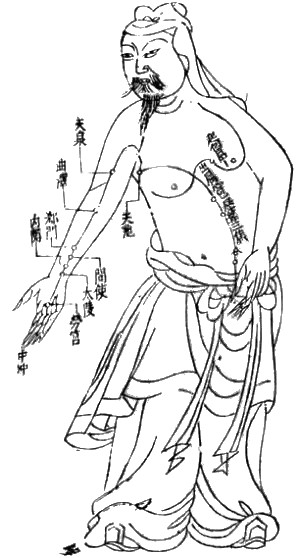
The golden core concept comes directly from neidan (内丹, “internal alchemy”), a real Daoist practice that emerged in the Tang and Song dynasties. Internal alchemists believed they could refine an immortality elixir not in a furnace but inside their own body, by circulating qi through specific channels for years. The resulting “inner elixir” was envisioned as a luminous golden sphere in the lower dantian (Wikipedia: Neidan).
External alchemy (外丹 / wàidān) tried to produce the same elixir in a literal furnace, often using mercury, lead, and arsenic. It killed many Tang emperors. Internal alchemy survived because it could not poison its practitioners — and the imagery of the golden core survived with it.
Modern xianxia takes this 1,200-year-old Daoist metaphor and makes it a literal organ. Authors describe the core in physical detail: its weight, rotation, internal patterns, the way it pulses when the cultivator absorbs ambient qi. This literalization is what distinguishes xianxia from the actual Daoist tradition — the same concept, but turned into a stat block.
How the Golden Core Works in Cultivation Novels
Formation
A cultivator forms their golden core at the end of the Foundation Establishment realm, when the qi compressed inside their dantian reaches sufficient density to solidify. The process usually involves:
- Months or years of seclusion to gather and refine qi
- A breakthrough attempt in deep meditation, often guided by a manual
- The compression event, in which qi inside the dantian collapses inward and crystallizes
- A minor tribulation (in some novels), testing the core’s stability
- Recovery period, often months long, as the cultivator’s body adapts
If the formation fails, the cultivator’s qi may scatter, damaging the meridians and potentially crippling them permanently. Successful formation extends lifespan to roughly 500 years and grants access to a new category of techniques.
Grade System
Most novels rank golden cores on a scale that determines the cultivator’s ceiling:
| Grade | Color/Quality | Realm Ceiling |
|---|---|---|
| Mortal grade | Grey, cracked | Stuck at Core Formation; cannot reach Nascent Soul |
| Earth grade | Pale yellow, minor flaws | Can reach Nascent Soul with effort |
| Heaven grade | Pure gold, smooth | Reliable progression to Soul Formation |
| Heavenly tribulation grade | Multi-colored, patterned | Protagonist-tier; can reach Mahayana and beyond |
A common plot device is the protagonist forming an unusually high-grade core — sometimes by accident, sometimes through a heaven-tier treasure. This core becomes the foundation of their later dominance over peers with average cores.
Function
The golden core does several things:
- Continuous cultivation: The core rotates inside the dantian even when the cultivator sleeps, refining ambient qi automatically. A Foundation Establishment cultivator must meditate to cultivate; a Core Formation cultivator cultivates 24/7.
- Technique source: Most high-level techniques draw their power from the core, not the surrounding qi reserves. A core’s quality directly determines technique potency.
- Lifespan engine: The core sustains the cultivator’s body, replacing the natural aging process with controlled, slow decay. Without the core, the cultivator’s lifespan stops extending.
- Soul foundation: At the next realm (Nascent Soul), the core itself transforms into the seed of a spirit-child. The core is the prerequisite organ for nascent-soul cultivation.
Reforging
If a cultivator forms a low-grade core, they have one possible escape: reforging (重塑金丹 / chóngsù jīndān). The cultivator deliberately shatters their existing core and forms a new one from scratch, hoping to produce a better grade. This is brutal:
- Lifespan resets or shrinks
- The cultivator drops back to early Foundation Establishment temporarily
- Failure usually means permanent crippling
- Even successful reforging takes decades
Reforging is the genre’s standard “comeback arc” for a Core Formation protagonist who realizes their original core is limiting them.
Nascent Soul Transformation
At the peak of Core Formation, the cultivator’s golden core cracks open and a tiny humanoid soul-figure — the nascent soul (元婴 / yuányīng) — emerges. The core itself ceases to exist as a separate object; its substance becomes the body of the new soul. From this point forward, the cultivator’s true self is the nascent soul, and the physical body is a vessel.
Related Terms
- Qi — the substance compressed into the core
- Dantian — the chamber that holds the core
- Meridians — the channels qi flows through after exiting the core
- Spiritual Root — innate talent that influences core grade
- Tribulation — the heavenly trial that often accompanies core formation
- Cultivation Realms — the full hierarchy the golden core sits within
Common Misconceptions
“The golden core is a soul or consciousness.” No. The core is condensed qi — energy made solid. It has no consciousness of its own. The cultivator’s soul still lives in the upper dantian. Only at the Nascent Soul realm does the core’s substance transform into part of the soul, and even then, the soul is what is conscious, not the original core.
“Once you form a core, you can never lose it.” A golden core can be destroyed by an attack on the dantian, dissolved during a failed breakthrough, or deliberately shattered for reforging. Losing one’s core is the genre’s classic “fall from grace” plot device.
“The bigger the core, the stronger the cultivator.” Size matters less than density and grade. A small, pure, smoothly-rotating core outperforms a large, mottled, slow one. This is the same logic as the spiritual root — quality over quantity.
FAQ
Q: How long does it take to form a golden core?
In most novels, decades. A talented cultivator might reach Foundation Establishment in 10–20 years, then spend another 30–50 years pushing to Core Formation. A genius might do it in half the time. A protagonist, of course, can do it in a few years through cheats, treasures, or system bonuses.
Q: Can multiple golden cores be formed?
In standard xianxia, no — one cultivator forms one core. But the genre regularly invents exceptions: dual cores, triple cores, cores in each dantian, cores with special inner structures. These are usually protagonist exclusives.
Q: What happens to the core after the cultivator dies?
If the cultivator dies before Nascent Soul, the core sometimes survives the body’s destruction and can be harvested. A wild core (野金丹 / yě jīndān) is a powerful treasure — it can be absorbed by another cultivator to accelerate their own progress, or used as raw material in alchemy. This sets up xianxia’s grimmer plot lines, in which cultivators hunt each other for their cores.
See Also
- Cultivation Realms Explained — the Core Formation realm in full context
- Qi, Dantian, Spiritual Root — the prerequisites for core formation
Sources:
– Neidan (Internal Alchemy) — Wikipedia
– Daoist Alchemy — Wikipedia
– Cantong Qi — Wikipedia
– Pregadio, Fabrizio. The Encyclopedia of Taoism. Routledge, 2008.