Meridians in Xianxia: Meaning, Function, and Cultivation System
Meridians (经脉 / Jīngmài, pronounced “jing-mye”) are the channel network through which qi flows inside the human body in traditional Chinese medicine and cultivation fiction. If qi is the fuel and the dantian is the tank, meridians are the plumbing — and a cultivator’s progress depends heavily on how clear, wide, and numerous their meridians are.
What Do Meridians Mean?
The Chinese term breaks down clearly: jing (经) means “warp” or “passage,” drawing from the metaphor of a woven fabric where the warp threads run vertically. Mai (脉) means “vessel” or “pulse.” Together they describe the body’s internal road network for qi circulation.
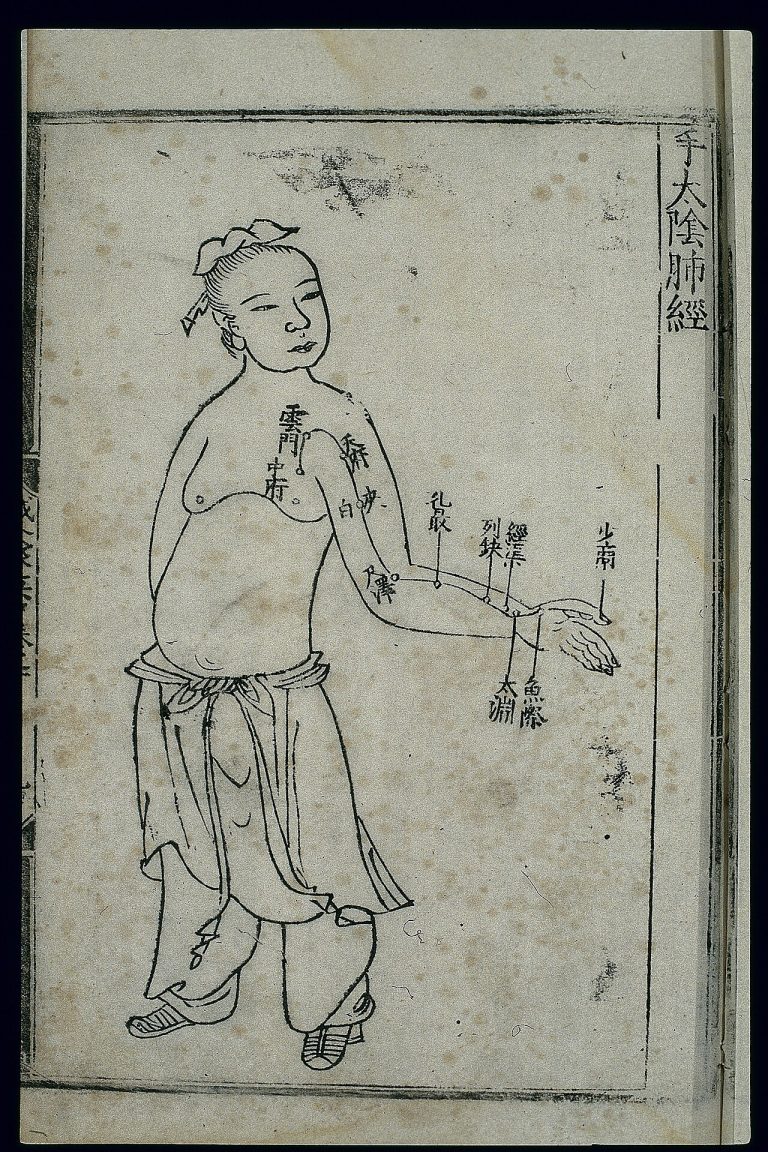
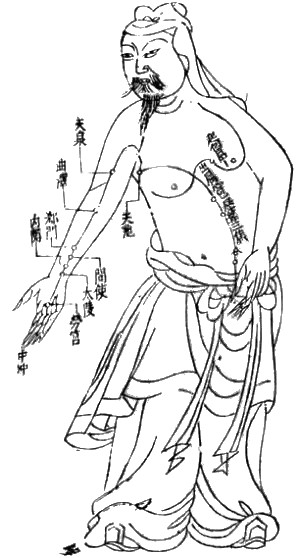
Traditional Chinese medicine recognizes twelve primary meridians (十二正经 / shí’èr zhèngjīng), each linked to a specific organ — lung meridian, heart meridian, liver meridian, and so on — plus eight extraordinary vessels (奇经八脉 / qíjīng bāmài). The full system covers 365+ branching vessels, mirroring the days of the year.
Xianxia novels simplify this dramatically. A cultivator’s meridians are treated as:
- Channels of fixed number — typically said to have 108 or 365 meridians when fully opened
- Obstructed at birth — mortals have blocked or narrow meridians; a cultivator’s first task is to open them
- Expandable through cultivation — wider meridians mean faster qi circulation, which means more power output
- Fragile under attack — an opponent who can rupture the protagonist’s meridians can cripple them
For how meridians connect to the overall power system, see Cultivation Realms Explained.
Pronunciation
| Pinyin | Jīngmài (1st tone + 4th tone) |
| English approximation | “jing-mye” (rhymes with “wing-mai” with a long i) |
| Simplified Chinese | 经脉 |
| Traditional Chinese | 經脈 |
Many English translations render it as “meridians,” borrowing the Western acupuncture term, or “channels” for a more literal read. You may also see “energy channels,” “qi channels,” or “vessels,” though these last two risk confusion with the circulatory system.
Etymology & Cultural Origin
The meridian system originates from the Huangdi Neijing (黄帝内经, Yellow Emperor’s Inner Canon), compiled around the 2nd century BCE, which describes the body as a microcosm of the natural world. Rivers flow through the landscape; qi flows through the meridians. Block a river and a region suffers drought. Block a meridian and a person falls ill.
This hydro-energetic framework has no equivalent in Western anatomy. There are no dissectible structures that correspond to meridians. Acupuncture — the therapeutic puncturing of specific meridian points (穴位 / xuéwèi, “acupoints”) — is the practical application of the theory, and modern research has documented measurable effects on pain and inflammation while the underlying mechanism remains debated (Wikipedia: Meridians).
Xianxia novels take the framework and literalize it. In the fiction, meridians are as real and visible as blood vessels, though visible only to spiritual sense. A cultivator “guides qi through the meridian network” like a martial artist deciding which path to deliver a punch.
How Meridians Work in Cultivation Novels
Opening the Meridians
The very first thing a potential cultivator must do is “open the meridians” (通经脉 / tōng jīngmài). This is usually described as a painful process in which qi is forced upstream through blocked channels. The protagonist grits their teeth as qi pushes through obstructions, each meridian opening with a feeling of pressure and release.
Opening all twelve primary meridians is the mark of a basic cultivator. Opening the eight extraordinary vessels — especially the Governing Vessel (督脉 / dūmài) and the Conception Vessel (任脉 / rènmài), which run along the spine and midline — is a significant threshold. When a cultivation manual talks about “the great circulation” (大周天 / dà zhōutiān), it means qi is flowing through all major meridians simultaneously, a state achievable only by high-level cultivators.
Meridian Width
The width of a cultivator’s meridians is a persistent plot concern:
- Narrow meridians: slow qi cycling, low raw power, safe technique usage
- Wide meridians: fast qi cycling, high raw power, risk of qi deviation if control can’t keep up
Protagonists often have “exceptionally wide meridians” from body tempering or a martial arts background, giving them outsized power at early stages that confuses stronger opponents. This is one of the genre’s most common power advantages.
Meridian Damage
A ruptured meridian means qi leaks out during circulation, making sustained combat impossible. A severed meridian means the affected body part cannot receive qi — a severed arm meridian makes the arm useless for techniques. Extensive meridian damage is a “crippled cultivator” (废人 / fèirén) diagnosis, the same punishment as a destroyed dantian.
The recovery usually requires a rare heaven-grade treasure, and the process of redrawing the meridian line is described as being more painful than the original injury.
Acupoints (穴位)
Meridian junctions often have acupoints (穴位 / xuéwèi, “cavity points”) — dense energetic nodes that respond to stimulation. In wuxia, a master who knows pressure-point strikes (点穴 / diǎnxué) can paralyze or kill an opponent with a single tap. In xianxia, acupoints are sometimes used as gateways for techniques — a cultivator channels qi through a specific acupoint to release a fireball or a protective barrier.
The Great Circulation vs. Small Circulation
Two recurring technical terms:
- Small Circulation (小周天 / xiǎo zhōutiān) — qi cycles only through the Conception and Governing vessels, the central axis of the body. This is the beginner’s goal.
- Great Circulation (大周天 / dà zhōutiān) — qi cycles through all meridians simultaneously. This is the advanced state of constant, effortless cultivation.
Achieving Great Circulation is often called a minor breakthrough even when the cultivator’s realm does not change, because it doubles or triples their effective cultivation speed.
Related Terms
- Dantian — the energy center where qi is stored; meridians connect the dantian to the rest of the body
- Qi — the substance that flows through the meridians
- Acupoint — pressure points on the meridian network used for techniques in wuxia and xianxia
- Qi Deviation — chaotic qi flow caused by meridian blockage or wrong-direction circulation
- Body Tempering — the pre-cultivation stage that widens meridians through physical training
Common Misconceptions
“Meridians are blood vessels.” No. The meridian system is a functional energy map, not a vascular one. Acupuncture points do not correspond to arteries or veins. The Chinese tradition separated qi from blood (血 / xuè) explicitly.
“Meridians exist only in fiction.” The meridian concept is a real framework in traditional Chinese medicine with over 2,000 years of clinical application. Acupuncture is a licensed medical practice in dozens of countries. What does not exist is meridians as visible channels inside the body — that is the xianxia literalization of a conceptual system.
“Meridians are the nervous system.” The nervous system distributes electrical signals; meridians are described as distributing qi. Some parallels exist (pressure points can affect nerve function), but the mechanisms are entirely different.
FAQ
Q: How many meridians does a cultivator need to open?
At minimum, the twelve primary meridians for basic cultivation. For advanced techniques and higher realms, all eight extraordinary vessels must be open as well, totaling the core twenty.
Q: Can meridians be forcibly opened by another person?
Yes, but at great risk to both parties. A master can “force qi through” a disciple’s blocked meridians to speed their cultivation, but a single mistake can cripple the disciple or cause a backlash that injures the master. This power asymmetry is a common plot device — the protagonist either receives this help from a trusted elder or suffers it from an enemy who wants to explode their meridians as a torture method.
Q: Do women have different meridians from men?
In traditional Chinese medicine, women have an additional meridian (the Bao / 胞) related to the uterus. Most xianxia novels ignore this and treat meridians as identical between genders. A few cultivation novels with female protagonists explicitly use the difference as a plot point.
See Also
- Cultivation Realms Explained — where meridian development fits in the full hierarchy
- Qi — the substance that flows through the meridian network
- Dantian — the qi storage center that meridians connect to
- Acupoint — the pressure points along meridian lines
Sources:
– Meridian (Chinese Medicine) — Wikipedia
– Acupuncture — Wikipedia
– Huangdi Neijing, ~2nd century BCE, public domain