Dao in Xianxia: Meaning, the Daoist Roots & How Cultivators Comprehend It
Dao (道, pronounced “dow”) is the ultimate principle of the universe in Chinese philosophy — the underlying pattern that gives rise to all existence. In xianxia novels, dao is the second axis of cultivation alongside qi: a cultivator accumulates qi to grow stronger, but comprehends dao to grow higher. At the upper realms, a cultivator’s understanding of the dao matters more than their raw power.
What Does Dao Mean?
Literally, dao (道) means “way,” “path,” or “road.” Philosophically, it refers to the way the universe naturally operates — the principle that makes water flow downhill, seasons change, and stars circle. The classic Daoist text Dao De Jing opens with the line “The dao that can be spoken is not the eternal dao,” which establishes the term’s defining paradox: dao is the underlying truth of reality, but reality is too vast for any single description to capture.
In xianxia and cultivation novels, dao functions on three levels at once:
- The cosmic dao — the single ultimate principle, also called the Heavenly Dao (天道 / tiāndào). The universe operates by its rules.
- A specific dao — a sub-principle a cultivator specializes in: sword dao, fire dao, time dao, illusion dao, life dao, killing dao. There are theoretically infinite specific daos.
- A cultivator’s personal dao — their individual interpretation and embodiment of the principles above. Two sword cultivators have different sword daos because they understand the sword differently.
When a novel says a cultivator has “comprehended the dao of fire to the 50% level,” it means three things simultaneously: they have absorbed the universal principle of fire, they have internalized it through technique, and they have made it personal. The combination of all three determines what they can actually do with fire.
For the broader cultivation framework dao operates within, see Cultivation Realms Explained.
Pronunciation
| Pinyin | Dào (4th tone, falling) |
| English approximation | “dow” (rhymes with “now”) |
| Wade-Giles | Tao |
| Japanese | Dō / Tō (道) |
| Korean | Do (도) |
“Tao” and “Dao” are the same word. Wade-Giles romanization (Tao) was standard in English from the 19th century until the 1980s and remains common in book titles — “Tao Te Ching,” “Taoism.” Modern pinyin (Dao) is the standard in academic and translation contexts. Xianxia translations almost always use Dao. If you see Tao in a martial arts context, it is the same concept.
Etymology & Cultural Origin
The dao concept predates Daoism the religion. The character 道 appears in pre-Daoist texts from the Spring and Autumn period (771–476 BCE) meaning “way” or “method.” Confucius used dao to mean the proper moral way of conducting oneself and society.
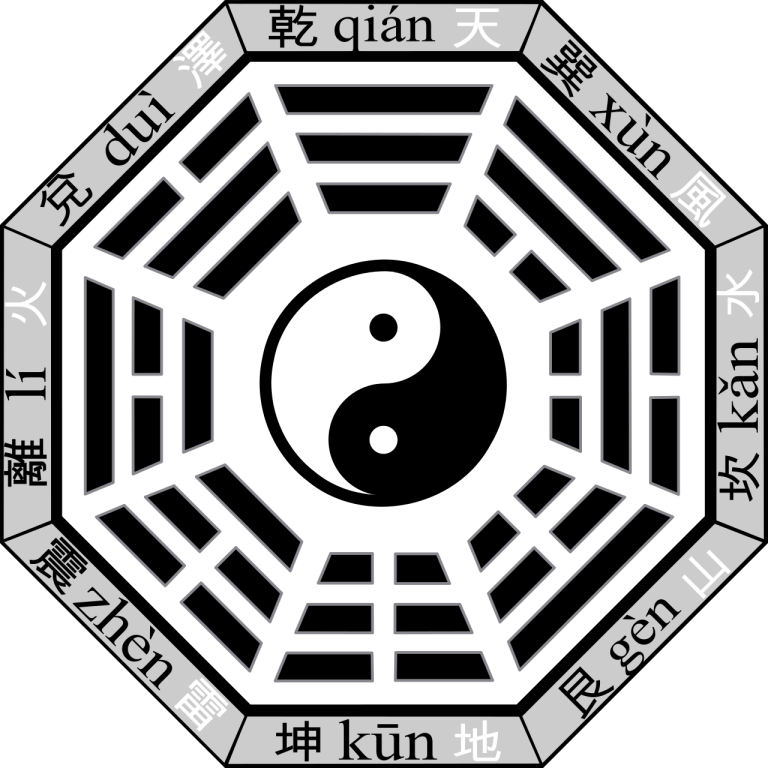
The metaphysical sense — dao as cosmic principle — was systematized by Laozi (老子, traditionally 6th century BCE) in the Dao De Jing (道德经) and expanded by Zhuangzi (庄子) in the Zhuangzi. These two texts are the foundation of philosophical Daoism. Later, religious Daoism (the organized religion with priests, temples, and ritual practices) developed from the 2nd century CE onward, drawing on the same vocabulary but adding gods, immortals, and alchemy (Wikipedia: Tao; Daoism).
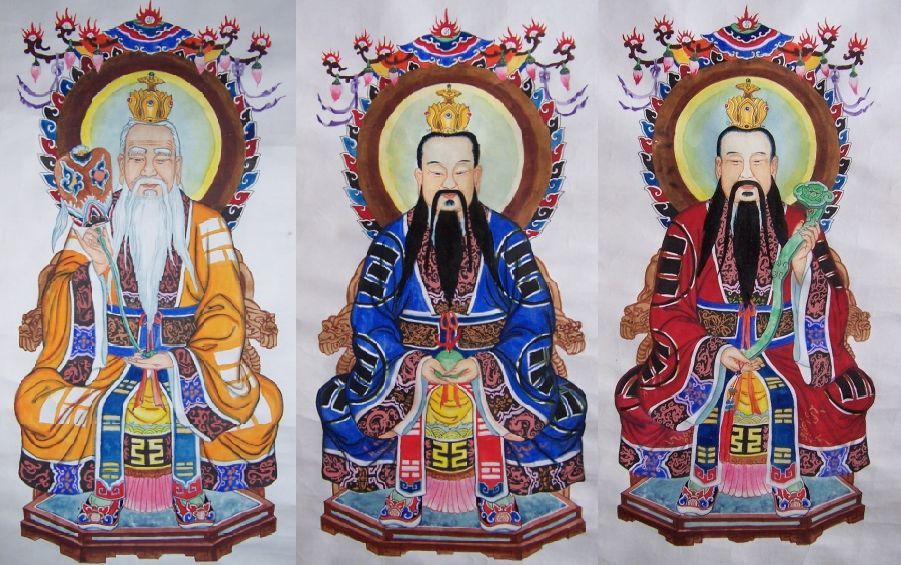
Xianxia inherits both layers. The cosmic dao of philosophical Daoism gives the genre its theme — the cultivator’s lifelong journey toward understanding. Religious Daoism gives the genre its furniture: immortals, alchemy, talismans, sword-flight, and the entire visual vocabulary of mountain temples and reclusive elders.
How Cultivators Comprehend Dao
Comprehending dao is the genre’s second main currency, separate from raw cultivation. A cultivator can spend a decade in seclusion either:
- Refining qi to push toward the next realm threshold, or
- Meditating on the dao to deepen their comprehension percentage
The two activities use different muscles. Qi cultivation is grind. Dao comprehension is insight. A protagonist who breaks through Foundation Establishment in three years but has only 1% comprehension of any dao is a glass cannon — strong raw stats, weak ceiling. A protagonist who reaches Foundation Establishment after thirty years but has 30% comprehension of sword dao is a monster — they will outclass peers for the rest of their career.
The standard percentage system most novels use:
| Comprehension | What It Means |
|---|---|
| 1–10% | Basic familiarity; technique works |
| 10–30% | Skilled use; can innovate |
| 30–50% | Mastery; technique is personal |
| 50–80% | Expert; can teach others |
| 80–99% | Near-perfection; can manipulate dao at will |
| 100% | “Great Dao”; transcendence to the source itself |
Reaching 100% in any specific dao is functionally godhood for that domain. A cultivator who fully comprehends fire dao can do anything fire-shaped — create suns, burn time, freeze with cold-fire. The percentages are narrative shorthand, but they let authors track progression without inventing new techniques every chapter.
Common Dao Paths in Cultivation Novels
Authors invent daos liberally, but a few recur across the genre:
Elemental Daos
Fire, water, earth, metal, wood (the Chinese five elements), plus lightning, ice, wind, and poison as extensions. These are the most common starting daos because they map cleanly to flashy abilities.
Conceptual Daos
Sword, blade, fist, spear — daos rooted in a specific weapon or martial form. Sword dao is by far the most common, supported by the entire wuxia tradition of jian (剑) as a noble weapon.
Abstract Daos
Time, space, illusion, life, death, karma, fate. These are the most powerful and the rarest. A cultivator who comprehends even 10% of time dao can slow opponents; 50% can reverse small actions; 100% can do almost anything.
Forbidden Daos
Killing, slaughter, devouring, demonic. These produce massive short-term power at heavy long-term cost — usually corrupted dao hearts, karmic backlash, or attracting more powerful enemies.
Original Daos
Some protagonists discover or invent a new dao no one has cultivated before — an “ancestral dao,” a “primordial dao,” or a fusion dao that combines two others. This is a common protagonist exclusive trope.
Dao Heart (道心)
Closely related is the concept of dao heart (道心 / dàoxīn) — the cultivator’s mental and moral stability with respect to their dao. A strong dao heart means the cultivator believes in their path absolutely and cannot be shaken. A weak or “cracked” dao heart causes failed breakthroughs, qi deviation, and at the worst, deviation into demonic cultivation.
The genre uses dao heart as a psychological mechanic. An enemy doesn’t just try to kill the protagonist — they try to break the protagonist’s dao heart with mockery, philosophical challenge, or moral dilemma. A protagonist who can hold their dao heart against all attacks is unbeatable. A protagonist who loses faith in their dao loses everything.
Related Terms
- Qi — the substance; dao is the pattern that organizes it
- Dantian — where qi is stored; dao is what qi expresses when used
- Heavenly Dao — the supreme cosmic dao that all specific daos are part of
- Dao Heart — the cultivator’s mental fortitude in their chosen dao
- Insight / Enlightenment — sudden jumps in dao comprehension
- Heart Demon — the internal opponent that attacks the dao heart
Common Misconceptions
“Dao means Taoism.” Daoism is a tradition that uses the dao concept, but dao itself predates and exceeds Daoism. Confucians, Buddhists, and even secular Chinese philosophers all use dao with different emphases. In xianxia, dao is closer to the philosophical concept than the religious one — though the religious imagery (immortals, talismans, sword flight) decorates everything.
“100% dao comprehension means the cultivator is the most powerful being.” It means they fully understand one specific dao. The Heavenly Dao itself contains infinite specific daos. A 100% fire-dao master is still a child compared to a being who comprehends 30% of the Heavenly Dao at the cosmic level.
“Dao and qi are the same thing.” They are paired but distinct. Qi is what a cultivator has — the resource. Dao is what a cultivator understands — the framework for using it. You can have enormous qi and zero dao (a strong but stupid brute), or modest qi and deep dao (a refined elder who beats brutes through technique).
FAQ
Q: Can a cultivator have multiple daos?
Yes, and many do. Cultivating multiple daos is harder than focusing on one — the cultivator’s energy is split — but a successful multi-dao cultivator has versatility a specialist lacks. Most novels make the protagonist a multi-dao cultivator, since narrative variety demands it.
Q: Does the dao actually exist or is it fictional?
The philosophical dao is a real concept in Chinese thought, attested for 2,500 years. It is not a measurable physical thing. In xianxia novels, dao is treated as physically real — it has structure, can be tested, can be cultivated. The fiction takes the philosophical concept and gives it teeth.
Q: What is the difference between dao and tao?
None. Same word, different romanization. Use whichever the source uses.
See Also
- Cultivation Realms Explained — where dao comprehension matters most in the realm hierarchy
- Daoism in Xianxia — the philosophical and religious tradition behind the term
- Qi — the paired concept
Sources:
– Tao — Wikipedia
– Taoism — Wikipedia
– Dao De Jing — Wikipedia
– Dao De Jing, Laozi, ~6th century BCE (public domain)
– Zhuangzi, Zhuang Zhou, ~4th century BCE (public domain)