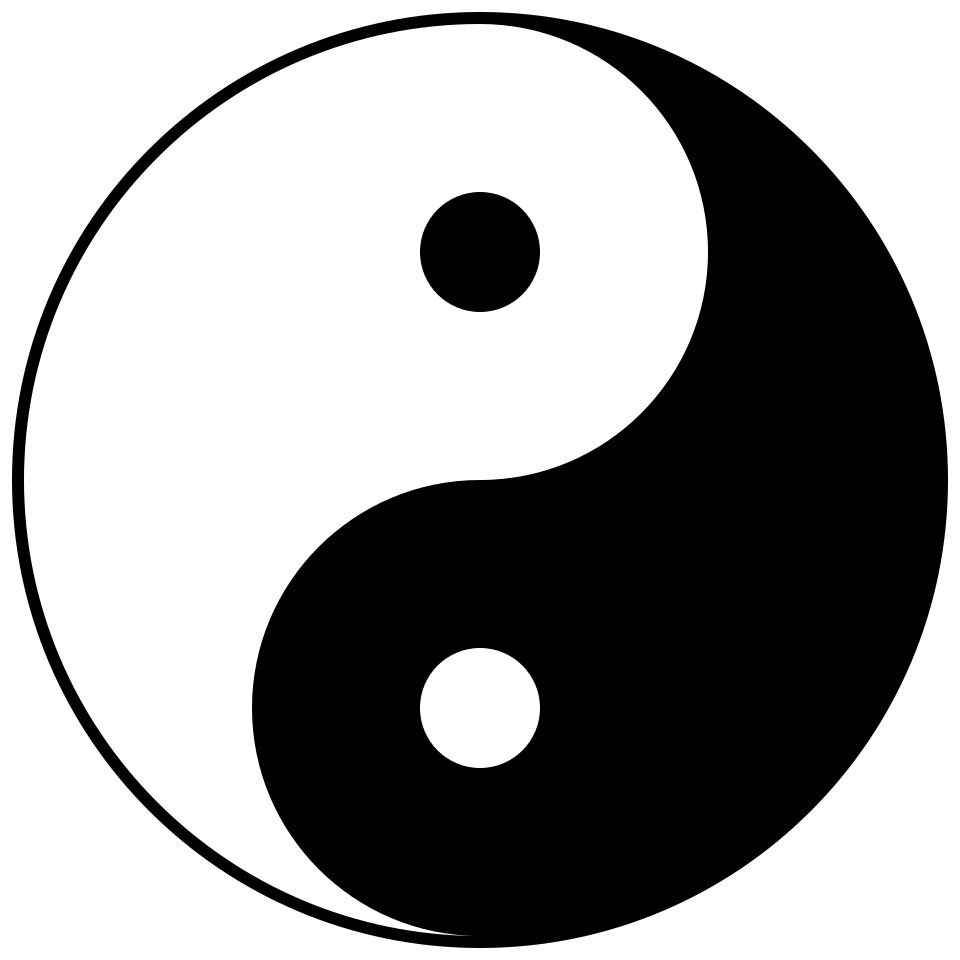
Taijitu — the yin-yang symbol representing complementary forces in Chinese philosophy

Yin and Yang in Chinese Tradition & Xianxia Cultivation

Yin and Yang (阴阳 / Yīnyáng) is the Chinese philosophical framework that describes how apparently opposing forces — dark and light, cold and hot, female and male, passive and active — are actually complementary and interdependent. The classic symbol of the taijitu (太极图), with black and white swirling halves each containing a dot of the other, is one of the most recognized images in the world. In xianxia novels, yin-yang theory governs everything from dual cultivation to elemental techniques to the intoxicating dynamics of power itself.

What Are Yin and Yang?

Yin (阴) and Yang (阳) are not opposites in the Western sense of “good versus evil.” They are complementary forces that together constitute all phenomena. The framework describes how any system works: as one force rises, the other falls; as one peaks, the other begins to grow within it. The dot of the opposite color in each half of the taijitu embodies this — each contains the seed of its complement.

Key associations:

Attribute Yin (阴) Yang (阳)
Primary quality Dark, passive, receptive Bright, active, creative
Direction Inward, downward Outward, upward
Movement Contraction, stillness Expansion, motion
Temperature Cold Hot
Time of day Night Day
Season Winter Summer
Gender Female Male
Nature Earth, moon Heaven, sun
Body Interior, substance Surface, function

The framework is descriptive, not prescriptive. A healthy person is not “yang-dominant” — they have balanced yin and yang, each appropriate to the context. Illness in traditional Chinese medicine is diagnosed as yin-yang imbalance: too much yin (cold, stagnation) or too much yang (heat, agitation). Treatment restores balance.

The phrase itself belongs to real Chinese medical and philosophical practice in continuous use for over two millennia. It describes a framework of thought widely used in Chinese medicine, martial arts, philosophy, and everyday life.

Historical Origin

The yin-yang concept first appears in the I Ching (易经 / Yìjīng, Book of Changes), the oldest Chinese classic, traditionally dated to the 9th century BCE. The I Ching uses broken (yin) and solid (yang) lines to form sixty-four hexagrams, the basic building blocks of Chinese divination and cosmic analysis.

The concept was systematized during the Warring States period (475–221 BCE) by the school of Naturalists (阴阳家 / Yīnyáng jiā), whose most famous figure, Zou Yan (邹衍), applied yin-yang theory to history, politics, and natural cycles. By the Han dynasty (206 BCE – 220 CE), the framework had been absorbed into Confucianism, Daoism, and medicine as a universal explanatory tool.

The canonical yin-yang statement appears in the Dao De Jing (ch. 42): “The dao gives birth to one; one gives birth to two; two gives birth to three; three gives birth to all things. All things carry yin on their back and embrace yang in their front, and when the two qi become harmonious, they create balance.” This is the passage that grounds yin-yang in the dao itself, making it not a separate principle but an expression of the dao’s operation.

Core Principles

Relativity

Nothing is purely yin or purely yang in an absolute sense. A day is yang relative to night (yin), but winter (yin) is yang relative to a colder winter day. The classification depends on context.

Mutual Dependence

One cannot exist without the other. The concept of “dark” has meaning only in reference to light. Without yang, yin is undefined, and vice versa.

Mutual Containing

Each force contains the seed of the other, represented by the dot of opposite color in the taijitu. When yin reaches its maximum, yang begins to grow within it (the darkest part of night precedes dawn). When yang peaks, yin begins to return.

Transformation

The two forces cycle continuously. The daily yin-yang cycle (dawn → noon → dusk → midnight) and the yearly cycle (spring → summer → autumn → winter) are both descriptions of yin and yang in motion.

How Xianxia Novels Use Yin-Yang

Dual Cultivation (双修)

The most famous yin-yang-derived trope. Dual cultivation is the practice of two cultivators — ideally one yin-aspected and one yang-aspected — cultivating together to accelerate progress. The theory: the interaction of yin and yang qi produces a higher-quality energy than each can generate alone. When done in literature, the mechanic is usually described as “qi circulation between two bodies rather than one.”

Dual cultivation exists in real Daoist practice as an advanced technique, though the historical descriptions are meditative and metaphysical rather than the physically active portrayals common in fiction. Xianxia novels have varied interpretations: from the clinical (qi-channel fusion during meditation) to the exploitative (villains forcibly extracting yin/yang qi from weaker cultivators). The best novels treat it as a symmetrical mutual benefit, not a power-transfer scheme.

Body Types

Certain body types in xianxia are described as “pure yin” or “pure yang” constitutions — someone born with a body that produces only one type of qi. This is often treated as both a gift and a curse:

  • Pure yin body: Rare; produces high-quality yin qi. The cultivator can use yin techniques at advantage but is vulnerable to yang-attributed ailments. Often dies young unless they find a counterpart.
  • Pure yang body: Similarly rare and imbalanced. Overheating, aggression, shortened lifespan if uncorrected.
  • Nine Yang Body, Nine Yin Body: Fictional extreme variants; usually protagonist exclusives
  • Balanced constitution: Rare but regarded as the healthiest foundation

Pure yin/yang bodies create a narrative need: the cultivator must find a counterpart or a treasure to achieve balance, or they will eventually die from their own imbalance.

Yin-Yang Techniques

The most powerful techniques in many xianxia novels require mastery of both yin and yang. A fire (yang) technique is strong, but a fire + ice (yin-yang fusion) technique is universe-shaking. The yin-yang fusion is typically described as creating a “primordial chaos” (混沌 / hùndùn) force that predates and surpasses both.

Many novels structure progression around the cultivator starting with one element, then acquiring its opposite, then combining them. The combination moment is usually marked as a major breakthrough signifying the cultivator transcending single-element limitations.

Yin-Yang in the Heavenly Dao

At the highest metaphysical levels, the Heavenly Dao itself is often described as balancing yin and yang across the cosmos. Over-dominance of either leads to cosmic collapse. Cultivators who attempt to destroy the world are described as creating an “unbalanced” dao that the Heavenly Dao must correct — sometimes through the protagonist’s actions.

Real vs. Fictional Yin-Yang

Real Yin-Yang Xianxia Yin-Yang
A descriptive philosophical framework A power system with specific effects
Balance is the goal; imbalance causes illness Pure yin/yang bodies are rare and special
Dual cultivation practices are meditative Dual cultivation in xianxia often has combat applications
Yin-yang explains natural cycles (day/night, seasons) Yin-yang explains combat advantage, racial traits, treasure types
The taijitu is a diagram of a principle The taijitu may be a literal weapon or technique-generator

The gap is the same pattern across all culture-to-fiction borrowings: xianxia takes the real concept, literalizes and simplifies it, and turns it into a game-like mechanic. This is not a mistake — it is the genre’s operating method.

Yin-Yang in Wuxia

Wuxia novels use yin-yang with more restraint. Famous wuxia techniques like “the Nine Yin Skeleton Claw” (九阴白骨爪) from Jin Yong’s The Legend of the Condor Heroes borrow yin-yang vocabulary without the cultivation-system mechanics. A wuxia master practicing a “yin technique” simply has a fighting style associated with cold, stillness, or stealth — not literal qi qualities the way a xianxia cultivation novel uses them.

Common Misconceptions

“Yin is bad, yang is good.” Neither is good or bad. Yin is darkness, which is necessary for sleep; yang is light, necessary for activity. The framework is descriptive of how systems function, not a moral judgment on forces.

“Yin-yang is the same as the Taoist religion.” Yin-yang predates religious Daoism and is used in Confucianism, Chinese folk religion, Buddhism, and secular Chinese thought. It is not owned by Daoism, though Daoism uses it extensively.

“The yin-yang symbol represents good vs. evil.” The Western frame is dualistic (two forces that fight). The Chinese frame is complementary (two forces that balance). The dot of opposite color in each half means each force contains the seed of the other — not that they are in permanent conflict.

Further Reading

See Also

  • Daoism in Xianxia — the larger philosophical framework yin-yang is part of
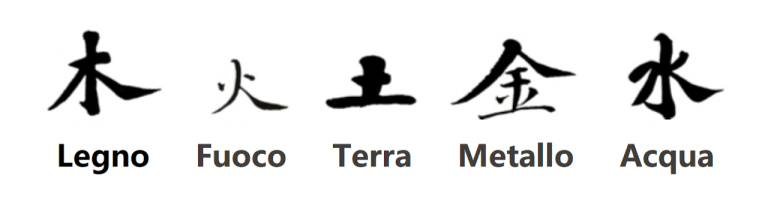
  • Five Elements — the complementary framework for categorizing natural forces
  • Qi — the substance divided into yin-qi and yang-qi
  • Dao — the cosmic principle expressed through yin-yang balance
  • Wuxia vs Xianxia vs Xuanhuan — how yin-yang usage differs across subgenres

Sources:
Yin and Yang — Wikipedia
Taijitu — Wikipedia
I Ching — Wikipedia
Traditional Chinese Medicine — Wikipedia
– Graham, A.C. Yin-Yang and the Nature of Correlative Thinking. Institute of East Asian Philosophies, 1986.
– Maciocia, Giovanni. The Foundations of Chinese Medicine. Churchill Livingstone, 3rd ed. 2015.

Similar Posts