Taiji in Chinese Cosmology & Xianxia: The Supreme Ultimate
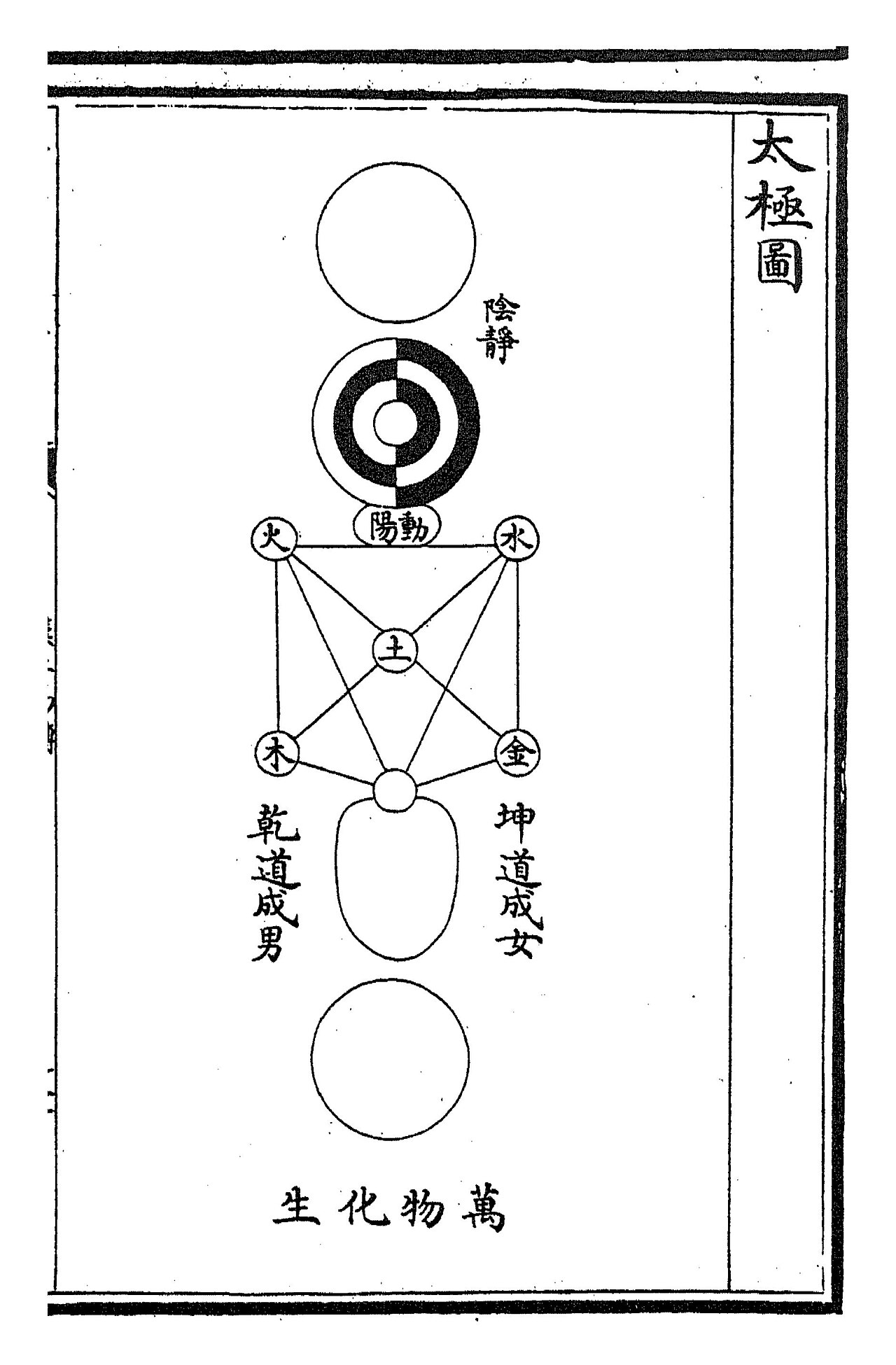
Taiji (太极, pronounced “tie-jee”) is the Daoist cosmological concept of the “supreme ultimate” — the first stirring of differentiation from the undifferentiated void of Wuji. Where Wuji is pure potential, Taiji is the moment that potential begins to move, producing the seeds of yin and yang. The classic swirling black-and-white symbol most Westerners call “yin-yang” is technically the taijitu (太极图, “diagram of the supreme ultimate”) — and the distinction matters for understanding xianxia cultivation at the higher realms.
What Does Taiji Mean?
The Chinese tàijí combines tài (太, “great, supreme, ultimate”) and jí (极, “pole, extreme, ridgepole”). Together it means something like “supreme pole” or “great ultimate” — the single axis around which all subsequent duality organizes. The concept is older than the term; the character 极 appears in the I Ching (易经) appendix (Great Treatise / 大传) as the principle from which the two primary forces (yin and yang) emerge.
In the standard Daoist cosmological cascade:
- Wuji (无极) — undifferentiated void
- Taiji (太极) — first stirring, the “supreme ultimate”
- Yin-Yang (阴阳) — two complementary forces
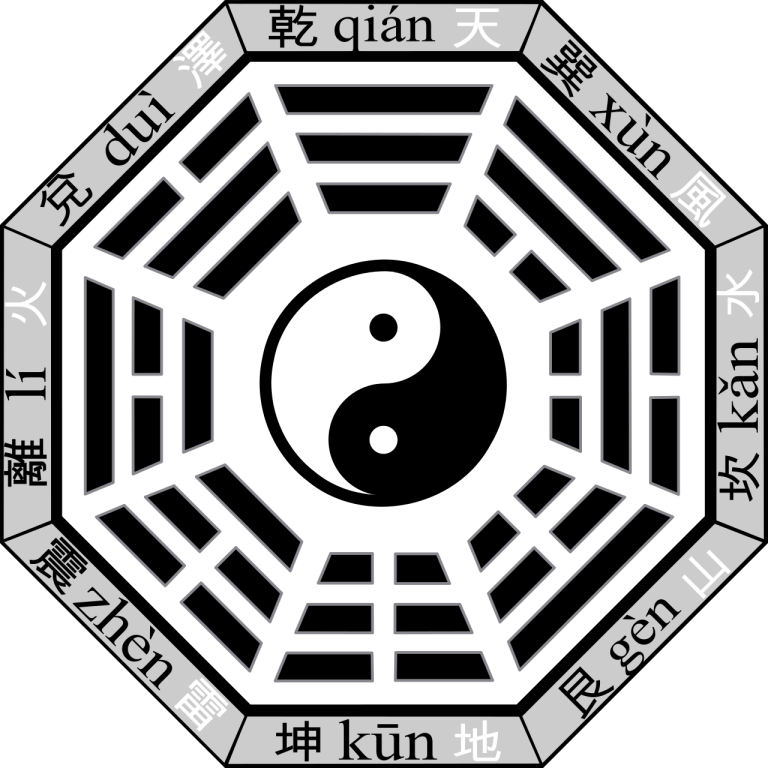
- Bagua (八卦) — eight trigrams
- Wanwu (万物) — the ten thousand things
Taiji sits between unity and duality. It is the bridge: not yet split into yin and yang, but no longer unified. The taijitu symbol depicts this perfectly — black and white swirl together, each containing a dot of the other, neither dominant.
For the broader cosmological framework, see our Yin and Yang article’s section on the cascade.
Pronunciation
| Pinyin | Tàijí (4th tone + 2nd tone) |
| English approximation | “tie-jee” (similar to “tie” + “gee”) |
| Simplified Chinese | 太极 |
| Traditional Chinese | 太極 |
| Common translations | “supreme ultimate,” “great pole,” “great ultimate” |
The English name “Tai Chi” (the martial art) uses the older Wade-Giles romanization. Modern pinyin is Taiji. Same word, same characters, same concept — the martial art (太极拳, tàijíquán) takes its name from the cosmological principle.
Historical Origin
The Taiji concept was formalized by Zhou Dunyi (周敦颐, 1017–1073 CE), a Song dynasty Neo-Confucian philosopher, in his short but enormously influential text Taijitu Shuo (太极图说, “Explanation of the Diagram of the Supreme Ultimate”). Zhou synthesized Daoist, Buddhist, and Confucian cosmology into a single sequence:
“Wuji gives rise to Taiji. Taiji in motion produces yang. When motion reaches its limit, it becomes still. Stillness produces yin. When stillness reaches its limit, it returns to motion. Motion and stillness alternate, each being the source of the other. Distinguishing yin and yang, the Two Modes are established.”
This passage, written in the 11th century, remains the canonical statement of how Chinese cosmology understands emergence from unity to multiplicity (Wikipedia: Taiji).
The taijitu diagram itself has multiple historical variants. The version most familiar to Western readers — the swirling circle with two dots — was popularized in the Ming dynasty and is sometimes called the “River Diagram” or taiji tus in Daoist texts. Zhou Dunyi’s original diagram was different, more abstract.
How Taiji Functions in Real Chinese Tradition
Taiji is not just an abstract cosmological idea. It operates in several living Chinese traditions:
Taijiquan (Tai Chi Chuan) — Martial Art
The slow, flowing martial art practiced by millions worldwide takes its name from Taiji philosophy. Each movement is intended to express the Taiji principle: continuous alternation of yin (yielding, receptive) and yang (extending, active), with no sharp boundary between them. The art’s internal mechanics explicitly work with the cosmological concept (Wikipedia: Tai chi).
Traditional Chinese Medicine
TCM theory describes health as the dynamic balance of yin and yang within the body — a Taiji-state of the human system. Illness is a disruption of that balance; treatment restores the Taiji dynamic. The lower dantian, the body’s energy center, is sometimes described as the body’s Taiji point.
Daoist Meditation
Internal alchemy (内丹, neidan) practitioners work explicitly with the Taiji concept. The goal of advanced meditation is to dissolve the yin-yang split within the body and return to a Taiji state of unified qi — and ultimately to Wuji beyond it. The famous “microcosmic orbit” meditation circulates qi through the body’s meridians in a pattern that mirrors the taijitu’s swirl.
Feng Shui
Taiji appears in feng shui as the central organizing principle of any space. A balanced room has its Taiji — the point from which yin (quiet, dark, soft) and yang (active, bright, hard) distribute harmoniously.
How Xianxia Novels Use Taiji
Taiji as a Fusion Principle
The most common xianxia use of Taiji is as the conceptual basis for fusion techniques — abilities that combine yin and yang qi into a unified force. A cultivator who has mastered Taiji comprehension can:
- Hold yin and yang qi simultaneously without one overwhelming the other
- Fuse opposing elemental techniques (fire + water, light + dark) into hybrid attacks
- Resist soul-attack techniques that exploit yin-yang polarity
- Stabilize qi deviation by re-centering on Taiji equilibrium
Taiji Comprehension as a Realm Threshold
Many xianxia novels treat deep Taiji comprehension as a mid-to-high realm milestone:
- At Nascent Soul: A cultivator can begin to grasp Taiji, typically through dual cultivation or elemental fusion
- At Soul Formation: Taiji comprehension becomes a gating requirement — without it, the cultivator cannot progress
- At Void Refinement and above: Taiji is the baseline; the cultivator begins reaching toward Wuji
Taiji Treasures and Formations
Taiji appears as literal objects and structures in xianxia:
- Taiji formation (太极阵): A defensive or sealing formation based on the taijitu pattern; extremely stable because yin and yang reinforce each other
- Taiji sword: A sword technique that channels both yin and yang qi through the blade, producing an attack that bypasses elemental defenses
- Taiji talisman: A talisman drawn in the taijitu pattern, used for protection or to harmonize ambient qi
- Taiji cauldron: An alchemy cauldron designed to refine pills using the Taiji principle, often a protagonist-exclusive treasure
The Taijitu as a Literal Weapon
In some novels, the taijitu itself becomes a weapon or treasure. A protagonist might manifest a giant taijitu in the sky that absorbs incoming attacks, redirects them as yin or yang counterattacks, and grounds the cultivator in cosmic balance. This is typically a high-realm signature ability.
Taiji vs. Yin-Yang: The Critical Distinction
Many English readers conflate Taiji and Yin-Yang because the famous symbol is called “yin-yang” in casual English. The distinction matters in xianxia:
| Taiji | Yin-Yang | |
|---|---|---|
| What it is | The unified principle before differentiation | The two differentiated forces |
| Symbol | The taijitu (swirling circle) | Often the same symbol, used loosely |
| Cultivation level | Higher realms (Nascent Soul+) | Mid realms (Foundation Establishment+) |
| Function | Fusion, unity, balance | Polarity, complementarity, opposition |
| When mastered | The cultivator transcends yin-yang limits | The cultivator can manipulate yin and yang separately |
A cultivator who has comprehended Yin-Yang can use fire and water techniques more efficiently. A cultivator who has comprehended Taiji can fuse them into a single technique that is neither — accessing the unified state that preceded their differentiation.
Related Terms
- Yin and Yang — the differentiated forces Taiji produces
- Wuji — the void from which Taiji arises
- Bagua — the eight trigrams produced when yin-yang further differentiates
- Dao — the cosmic principle Taiji expresses
- Heavenly Dao — the cosmic order Taiji structures
- Dantian — the body’s Taiji point in TCM and meditation
Common Misconceptions
“Taiji is the same as yin-yang.” They are related but distinct. Yin-yang is the duality; Taiji is the unified principle that contains the duality in potential. The taijitu symbol depicts Taiji, not yin-yang directly — the swirl shows yin and yang emerging from a single circle.
“Taiji is just a martial art.” Taiji is a cosmological concept over 1,000 years old. The martial art (taijiquan) was named after the concept in the 17th century and uses the principle in its mechanics. The concept is much bigger than the martial art.
“Taiji means balance.” Not exactly. Balance is a result of Taiji, but Taiji itself is the principle of unified potential from which balanced forces emerge. A glass of water with settled sediment is balanced but has nothing to do with Taiji. A taijitu actively swirling, with each half becoming the other, is Taiji.
FAQ
Q: Why do xianxia protagonists always seek Taiji comprehension?
Because Taiji is the gateway to the higher realms. Below Taiji comprehension, a cultivator can only manipulate yin and yang separately — powerful, but limited by the duality. Taiji comprehension breaks that ceiling, allowing fusion techniques and access to the Heavenly Dao at the cosmic level. It is the difference between a strong cultivator and a peak cultivator.
Q: Can a mortal practice taijiquan and gain cultivation benefits?
In real life, taijiquan is excellent exercise and mind-body practice. In xianxia, a mortal practicing taijiquan typically gains only marginal health benefits — true cultivation requires spiritual root and dedicated qi absorption. However, some novels have the protagonist begin as a mortal martial artist whose taijiquan practice gives them an unusual advantage when they later begin formal cultivation.
Q: Is Taiji the same as the dao?
No. The dao is the underlying principle of reality. Taiji is one expression of the dao — the moment the dao first manifests as motion, producing yin and yang. Wuji, Taiji, Yin-Yang, and Bagua are all stages of the dao’s self-expression, not the dao itself.
See Also
- Yin and Yang in Chinese Tradition & Xianxia — the full cosmological framework
- Wuji — the void Taiji arises from
- Bagua — the eight trigrams Taiji produces
- Cultivation Realms Explained — where Taiji comprehension matters
- Daoism in Xianxia — the religious tradition behind the concept
Sources:
– Taiji (philosophy) — Wikipedia
– Tai chi — Wikipedia
– Zhou Dunyi — Wikipedia
– Taijitu — Wikipedia
– I Ching — Wikipedia
– Adler, Joseph A. Chinese Religious Traditions. Prentice Hall, 2002.