Wulin Explained: The Martial Arts Community in Wuxia
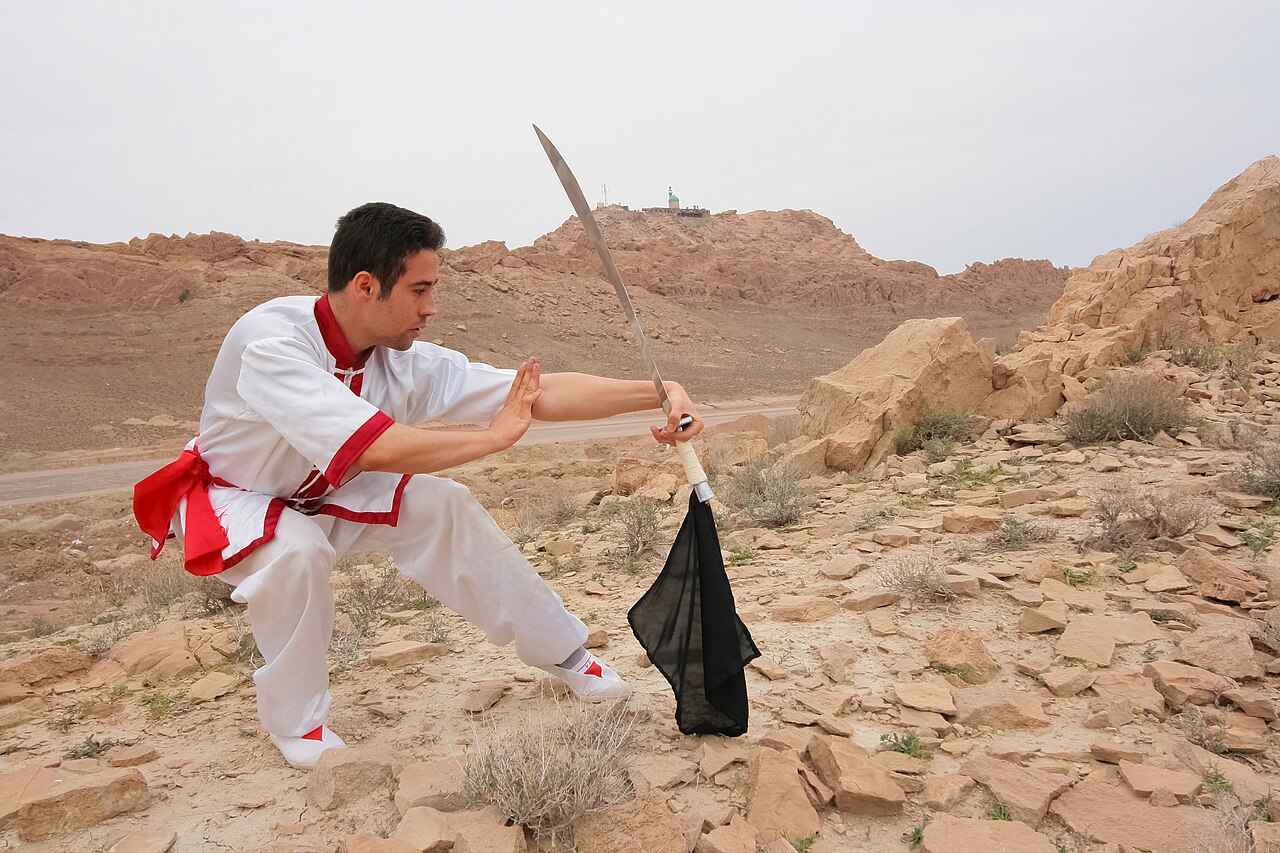
Wulin (武林 / Wǔlín, pronounced “woo-lin”) is the community of martial artists in wuxia fiction — the network of sects, masters, schools, and disciples who practice and live by Chinese martial arts. The wulin is the more specific subset of the broader jianghu world: every wulin practitioner belongs to the jianghu, but the jianghu also includes wandering merchants, beggars, gamblers, and others who are not martial artists. When a wuxia novel speaks of “wulin assemblies” or “the wulin’s response,” it means the martial arts community specifically.
What Does Wulin Mean?
The Chinese term breaks down to wu (武, “martial”) and lin (林, “forest”). A wulin is literally a “martial forest” — a metaphorical community of martial artists imagined as a dense, complex ecosystem where masters of different schools coexist, compete, and occasionally clash. The forest metaphor is precise: like a forest, the wulin has its overstory (legendary masters at the highest levels), its midstory (working sect masters and elders), and its understory (disciples and outer-sect members). Each layer interacts with the others.
In practical use, wulin includes:
- Sect members — disciples of named martial schools
- Independent masters — skilled practitioners with no sect affiliation
- Aristocratic martial clans — wealthy families practicing martial arts as inheritance
- Bodyguards and security companies — martial artists for hire
- Wuxia-style government officials — martial constables and martial generals
Wulin does not include cultivators in the xianxia sense. If a character can fly through the sky on a sword, achieve immortality, or break through cultivation realms, they belong to a different genre — see Wuxia vs Xianxia vs Xuanhuan for the distinction.
Pronunciation
| Pinyin | Wǔlín (3rd tone + 2nd tone) |
| English approximation | “woo-lin” (rhymes with “blue thin”) |
| Simplified Chinese | 武林 |
| Traditional Chinese | 武林 |
The phrase has no clean English equivalent. Translators sometimes use “martial world,” “martial community,” or leave it untranslated as “wulin.” Modern translations increasingly preserve the original term, since English readers familiar with wuxia recognize it.
Cultural Origin
The phrase 武林 appears in Chinese literature from the Ming and Qing dynasties as a description of organized martial arts communities. Real historical analogs included:
- Shaolin Temple — the most famous Chinese Buddhist monastery, with a documented martial tradition going back over a thousand years
- Wudang Mountain — Daoist priest-monks practicing internal martial arts including tai chi
- Family martial schools — Yang, Chen, and Wu styles of tai chi all originated in specific Chinese families
- Pugilist guilds — informal organizations of working martial artists in cities
Modern wulin in wuxia fiction draws from all these traditions but compresses and dramatizes them. Jin Yong’s wulin is recognizably descended from the Qing dynasty pugilist scene but operates as a more unified, more politically dramatic structure than the historical reality.
How Wulin Works in Wuxia Fiction
Wulin Conferences (武林大会)
Major wulin gatherings, often called every few years, where the leading sects and masters discuss inter-sect affairs: succession disputes, joint actions against demonic sects, recognition of new powers. A wulin conference is the genre’s standard set piece for political wuxia plots — alliances form, betrayals happen, and the protagonist often debuts here.
Wulin Rankings
A formal or informal hierarchy of who is currently strongest. Many wuxia novels include a “Wulin Top Ten” or “Hundred Heroes List” (百强榜), with public rankings that get revised after major duels. Climbing the ranking is its own quest line in many novels.
Wulin Honor Codes
The wulin enforces standards of conduct that supplement the wider jianghu code:
- Sect loyalty: A disciple must honor their sect; betrayal is the gravest offense
- Master-disciple bonds: A master who teaches receives lifelong gratitude; betrayal of one’s master is unforgivable
- Public challenges: Duels must be honorable, with witnesses and agreed terms
- Mercy traditions: A defeated opponent may be spared if they admit defeat
- Internal vs. external: Wulin matters are settled within the wulin; involving outsiders (government, foreigners) is shameful
These rules are routinely broken — wuxia plots are about which characters break them and what happens — but the rules themselves are stable.
Wulin in Modern Reality
Wulin as a phrase is still used in contemporary Chinese, often metaphorically. The modern martial arts community in mainland China, Hong Kong, and Taiwan refers to itself as “wulin” in informal contexts. Real martial arts schools, especially those preserving traditional styles, are sometimes called “wulin lineages” in journalism and academic writing.
The phrase has also leaked into broader Chinese language: a “wulin of cooking” means the world of professional chefs; a “wulin of e-sports” means the competitive gaming scene. The pattern of “a wulin of X” describes any rule-bound, skill-based competitive community.
Related Terms
- Jianghu — the broader world that includes the wulin plus non-martial figures
- Sect — the organized martial school, the wulin’s basic building block
- Xia — the heroic martial-artist archetype within the wulin
- Wandering Hero — a martial artist with no sect affiliation
- Orthodox vs Unorthodox — the moral split that divides the wulin
Common Misconceptions
“Wulin and jianghu are the same.” They overlap but are distinct. Wulin = martial artists specifically. Jianghu = the entire wandering / outside-society world, which includes martial artists plus much more. A traveling actor or a market fortune-teller is jianghu but not wulin.
“Wulin is just wuxia jargon.” It is a real Chinese word with a real history, used by actual martial arts communities in China today. Wuxia popularized it for English readers, but the term predates the genre.
“Cultivators are part of the wulin.” No — cultivators belong to xianxia, not wuxia. The wulin is bounded by mortality; cultivators transcend it. Some novels in the xianxia-xuanhuan hybrid space blur this line, but the strict definition keeps wulin a wuxia-specific concept.
FAQ
Q: Can a woman lead a wulin sect?
Yes, and many famous wuxia leaders are women — Guo Xiang founder of the Emei sect (Jin Yong), Lin Chaoying who created the Quanzhen counter-tradition. Historical wulin had fewer female leaders than fictional wulin, but the precedent exists and the genre celebrates it.
Q: How big is the wulin?
In a typical wuxia novel, hundreds of named sects and thousands of named members, with implied unnamed wider memberships. The largest single organizations (Beggar’s Guild, Shaolin, Wudang) have tens of thousands of members. The wulin operates at roughly the scale of a religious order — bigger than any single sect, smaller than the empire.
Q: Does the wulin still exist in modern China?
In a transformed sense. Many real lineages from imperial-era wulin survived into the 20th century, were suppressed during the Cultural Revolution, and are now reviving in modified form — as cultural heritage organizations, sport-wushu schools, and historical-preservation groups. The romantic wulin of Jin Yong’s novels is fiction; its real-world inheritance is institutional and bureaucratic.
See Also
- Jianghu — the broader social world
- Wuxia vs Xianxia vs Xuanhuan — wulin is a wuxia concept, not a xianxia one
- Sect, Xia — closely related wulin concepts
Sources:
– Wuxia — Wikipedia
– Jianghu — Wikipedia
– Shaolin Monastery — Wikipedia
– Wudang Mountains — Wikipedia
– Hamm, John Christopher. Paper Swordsmen: Jin Yong and the Modern Chinese Martial Arts Novel. University of Hawai’i Press, 2005.