Spiritual Root in Xianxia: What It Is and Why It Decides Everything
Spiritual root (灵根 / Línggēn, pronounced “ling-gen”) is the innate talent for cultivation in xianxia novels — the biological lottery that determines whether a person can absorb qi at all, and how quickly. Without a spiritual root, a person is permanently mortal. With a strong one, they can rise to the upper realms in a single lifetime. Almost every xianxia plot begins with the protagonist’s spiritual root being evaluated, dismissed, or revealed.
What Does Spiritual Root Mean?
The phrase breaks down literally: ling (灵) means “spirit” or “spiritual,” and gen (根) means “root.” A spiritual root is the energetic infrastructure inside a person’s body that allows ambient qi to flow inward and be retained. The metaphor is botanical — qi is the water, the practitioner is the plant, the spiritual root is what allows absorption.
A spiritual root has three measurable qualities in most xianxia systems:
- Presence: Whether the root exists at all. Most mortals have none.
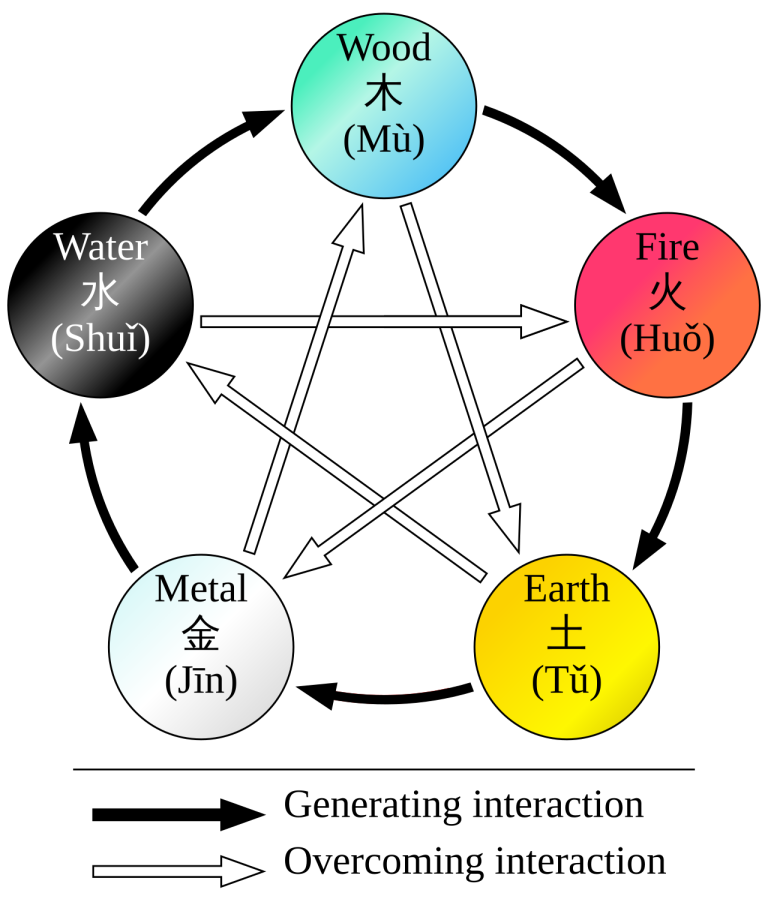
- Elemental affinity: Which type of qi the root absorbs most efficiently — fire, water, earth, metal, wood, or rarer types like ice, lightning, wind, light, dark, void
- Grade: The purity and strength of the absorption. A high-grade root absorbs qi 100× faster than a low-grade root of the same affinity.
For the broader system in which spiritual roots determine progression, see Cultivation Realms Explained.
Pronunciation
| Pinyin | Línggēn (2nd tone + 1st tone) |
| English approximation | “ling-gen” (rhymes with “bring then”) |
| Chinese characters | 灵根 (simplified), 靈根 (traditional) |
Some translators use “spiritual roots” (plural) — this is the same concept, treating the root system as multiple branches rather than a single organ. Both translations are accurate.
Etymology & Cultural Origin
The phrase “spiritual root” appears in classical Chinese poetry and Daoist texts, often metaphorically — a person’s “spiritual root” was their fundamental capacity for self-cultivation, spiritual development, or moral growth. The concept of inborn talent for spiritual practice is ancient in Chinese thought, traceable to Mencius (4th century BCE) and the Buddhist concept of prakṛti (innate nature).
Modern xianxia takes this philosophical concept and turns it into a measurable, almost biological trait. Authors describe spiritual roots in physical-sounding terms: “his root was clear as crystal,” “her root had a slight muddy tint,” “the root pulsed with elemental fire.” This literalization is one of the genre’s signature moves — taking a Chinese cultural metaphor and making it operate like a stat block (Wikipedia: Xianxia).
How Spiritual Roots Work in Cultivation Novels
The Evaluation Scene
Almost every xianxia protagonist undergoes a spiritual root evaluation in the early chapters. The standard setup:
- The protagonist is brought to a sect or testing facility
- A “spiritual root crystal” or pool is used to scan their body
- The crystal lights up (or doesn’t) in colors corresponding to elemental affinities
- A senior cultivator pronounces the result
The protagonist’s spiritual root is almost always rated as worthless or special. This scene exists in 90% of xianxia novels because it generates the central tension of the early plot: either the world underestimates the protagonist, or the protagonist must overcome an apparent disadvantage.
Grade System
The standard grade hierarchy from worst to best:
| Grade | Effect |
|---|---|
| No root | Cannot cultivate; permanently mortal |
| Common root | Can cultivate slowly; ceiling typically at Foundation Establishment |
| Mixed root (mortal grade) | Multiple weak elemental affinities; classic “trash root” status |
| Single-element root | Pure affinity for one element; can reach Nascent Soul |
| Heavenly-grade root | Rare, often elemental purity; can reach Soul Formation and beyond |
| Heaven-defying root | Unique types like void, chaos, or pure-yang; protagonist exclusive |
The “mixed root” trope is xianxia’s most famous starting condition. Protagonists frequently start with five mixed elements — which traditional cultivation theory considers worthless because the elements cancel each other out — and then turn this apparent weakness into an advantage by mastering all five elements simultaneously.
Elemental Affinity
A spiritual root’s affinity determines which techniques the cultivator can use efficiently:
- Fire root: Offensive and destructive techniques
- Water root: Healing, defense, illusion
- Wood root: Plant control, regeneration, alchemy
- Metal root: Sword techniques, body refining
- Earth root: Defense, terrain control, mining
- Lightning root: Rare; explosive power and divine punishment immunity
- Ice/Dark/Light/Void: Special grades, usually protagonist exclusive
A cultivator with a fire root who tries to use water techniques can technically do it, but the qi efficiency is so poor that they waste most of their reserves. Most cultivators specialize in techniques matching their affinity.
Can Roots Be Changed?
The default answer in most novels is no — your spiritual root is what you are born with. But this default exists primarily so the genre can break it dramatically. Common “root upgrade” devices include:
- Heavenly treasures that purify or replace the root
- Ancient bloodline awakening that reveals a hidden root underneath the original
- Dual cultivation that grafts a partner’s root onto one’s own
- Reincarnation where the protagonist’s previous-life root carries over
- System cheats in cultivation-system hybrid novels
The root-change scene is a major power-up beat in countless novels, typically arriving when the protagonist has hit a ceiling and needs structural growth to continue.
Spiritual Root vs. Talent vs. Bloodline
These three terms overlap but mean different things:
- Spiritual root is the qi-absorption mechanism — capacity
- Talent (天赋 / tiānfù) is overall cultivation aptitude — speed of insight and breakthrough
- Bloodline (血脉 / xuèmài) is inherited supernatural lineage — often a divine beast ancestor
A protagonist can have a mediocre spiritual root but a phoenix bloodline that compensates. Another might have a perfect root but no special bloodline. The interplay between the three is one of the genre’s primary power-progression levers.
Related Terms
- Qi — the substance the spiritual root absorbs
- Dantian — where the absorbed qi is stored
- Meridians — the channels through which absorbed qi travels
- Cultivator — anyone with a spiritual root who is actively training
- Bloodline — inherited supernatural lineage, separate from spiritual root
- Five Elements — the elemental framework spiritual roots are categorized by
Common Misconceptions
“A bad spiritual root means the character is doomed.” In real xianxia, almost never. A “trash root” diagnosis is the genre’s classic setup for a comeback story. If a novel actually lets a protagonist remain limited by their bad root, it is doing something unusual — A Record of a Mortal’s Journey to Immortality is one of the most famous examples and is celebrated specifically for not magic-fixing the protagonist’s root.
“Spiritual root is the same as a mana pool.” No. Mana pools store and regenerate magical energy. A spiritual root absorbs qi from the environment. The dantian stores it. The meridians distribute it. The spiritual root is the intake — the lungs, not the bloodstream.
“All xianxia novels use this exact system.” Most do, but variations exist. Cultivation systems based on bloodlines, demonic constitutions, or special body types (体质 / tǐzhì) sometimes downplay or ignore spiritual roots. Reverend Insanity uses a Gu insect system instead. Read the first few chapters to see which mechanic the novel privileges.
FAQ
Q: Can a person be born without a spiritual root and acquire one later?
In most settings, no — the root is innate. But the genre regularly invents exceptions: ancient ceremonies that grow a root, treasures that bestow one, reincarnation that brings one from a previous life. If the protagonist starts rootless, the plot will provide a method by chapter 50.
Q: Why does the protagonist always have five mixed elements?
Because it sets up the most satisfying reversal. The five-element mixed root is traditionally classified as the worst possible root — none of the elements is strong enough to be useful. When the protagonist discovers a method that lets them cultivate all five simultaneously, the original “weakness” becomes a unique advantage. This trope is so common that some authors have started subverting it by giving protagonists genuinely poor mixed roots that simply remain poor.
Q: How is a spiritual root tested?
The genre’s standard device is a sect-issued “spirit testing stone” or “spiritual root crystal” — a glowing object that responds to the tested person’s energy. Some novels use water pools, mystical mirrors, or specially bred plants that bloom in colors matching the tested person’s affinities. The mechanism is hand-waved; the dramatic function is what matters.
See Also
- Cultivation Realms Explained — how spiritual root quality determines realm ceiling
- Qi — the substance the root absorbs
- Five Elements — the elemental categories spiritual roots fall into
Sources:
– Xianxia — Wikipedia
– Wu Xing (Five Elements) — Wikipedia
– Chinese Folk Religion — Wikipedia