Daoism in Xianxia: The Real Religion Behind the Genre
Daoism (道教 / Dàojiào) is the indigenous Chinese religion and philosophical tradition that supplies xianxia fiction with nearly all its vocabulary, imagery, and cultivation framework. Cultivation realms, qi refining, golden cores, talismans, sword flight, mountain immortals, the dao itself — all of it is borrowed from a living religion with a 2,500-year history. This article maps what real Daoism actually teaches, what xianxia takes from it, and where the fiction diverges.
What Is Daoism?
Daoism is a Chinese philosophical and religious tradition centered on the concept of the dao (道, “the way”) — the underlying principle of the universe. It emerged in the Warring States period (475–221 BCE) and developed into two overlapping streams: philosophical Daoism (道家 / Dàojiā), focused on the writings of Laozi and Zhuangzi; and religious Daoism (道教 / Dàojiào), an organized religion with priests, temples, deities, rituals, and a long history of state and folk practice.
Daoism is still practiced today. China has thousands of active Daoist temples, the largest concentrated on sacred mountains like Wudang (武当山), Qingcheng (青城山), and Longhu (龙虎山). The Chinese Taoist Association estimates tens of millions of practitioners in mainland China alone, with significant communities in Taiwan, Hong Kong, Singapore, Malaysia, and the Chinese diaspora (Wikipedia: Taoism).
For Western readers approaching xianxia, the most important point is this: Daoism is not background flavor. It is the operating system of the genre. Every realm name, every breakthrough mechanic, every talisman and sword sect borrows from real Daoist concepts and practices.
Origin and History
Philosophical Foundation (6th–3rd century BCE)
The two foundational texts:
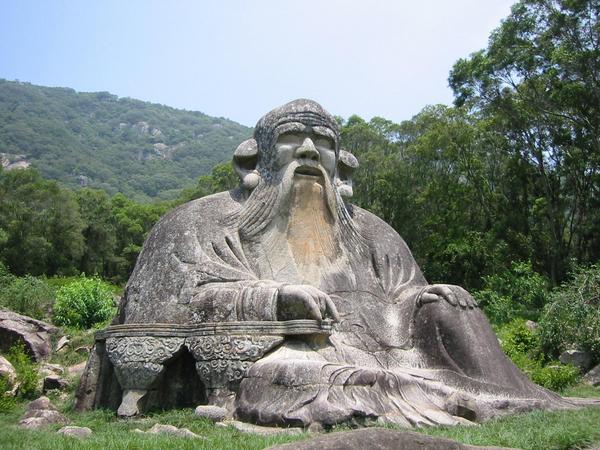
- Dao De Jing (道德经), attributed to Laozi (老子, “Old Master”), traditionally dated to the 6th century BCE. A short, dense, aphoristic text of 81 chapters that introduces the dao as the unnameable source of all things, advocates wuwei (无为, “non-action” or effortless action), and offers political and personal guidance grounded in cosmic principles.
- Zhuangzi (庄子), by Zhuang Zhou (4th century BCE). A longer, story-rich text full of paradoxes, dream sequences, and dialogues that explore the nature of reality, identity, and freedom. The famous “butterfly dream” — Zhuangzi cannot tell whether he is a man dreaming he is a butterfly or a butterfly dreaming he is a man — comes from this text.
These texts shaped Chinese thought for the next two millennia (Wikipedia: Dao De Jing; Zhuangzi).
Religious Daoism Emerges (2nd century CE onward)
Organized religious Daoism began in the late Han dynasty (2nd century CE) with movements like Way of the Celestial Masters (天师道 / Tiānshī Dào), founded by Zhang Daoling in 142 CE. From this point, Daoism gained:
- An organized priesthood with hereditary lineages
- Ritual practices, including the famous talisman-drawing
- A pantheon of gods, immortals, and ancestral spirits
- Temples on sacred mountains
- Imperial patronage at various points (Tang and Song dynasties especially)
The religion absorbed and reorganized older folk practices — shamanism, ancestor veneration, alchemy — into a coherent tradition. By the Tang dynasty (618–907 CE), Daoism was one of the “Three Teachings” (三教 / sānjiào) alongside Confucianism and Buddhism, with imperial recognition and influence over court culture.
Internal Alchemy Era (Tang–Song dynasties)
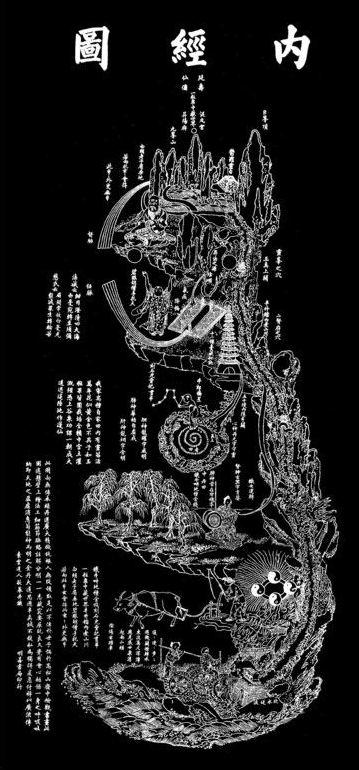
The most directly xianxia-relevant period. Daoists developed neidan (内丹, “internal alchemy”) — the practice of refining qi inside the body to produce a spiritual elixir. This replaced earlier waidan (外丹, “external alchemy”), which involved literal metallic elixirs that poisoned several Tang emperors with mercury and lead (Wikipedia: Neidan).
Internal alchemy texts like the Cantong Qi (参同契) and Wuzhen Pian (悟真篇) describe practices that directly map onto modern xianxia: refining jing (精, “essence”) into qi, then qi into shen (神, “spirit”), then shen into emptiness — a three-stage refinement that became the foundation of cultivation realm progression in fiction.
Modern Era
Daoism survived the upheavals of the 20th century — including significant suppression during the Cultural Revolution — and is now experiencing a revival, particularly in Taiwan and mainland China. Daoist temples, priesthood ordinations, and ritual practices are documented and continuing.
Core Concepts Xianxia Borrows
The Dao Itself
The dao in xianxia is recognizably the same concept Laozi described: the underlying pattern of reality, simultaneously transcendent and immanent. Xianxia’s innovation is to make the dao explicitly comprehendable in measurable percentages — a cultivator can master 30% of fire dao, 50% of sword dao, and so on. Real Daoism resists exactly this kind of quantification (“The dao that can be spoken is not the eternal dao” — Dao De Jing, ch. 1). The fiction borrows the vocabulary but inverts the philosophy.
Qi and Internal Alchemy
Qi in xianxia is a literal substance the cultivator absorbs from the environment. Real Daoism (and traditional Chinese medicine) treats qi as a functional concept describing the body’s vital functions. Real internal alchemy refines qi through visualization and breath practice, not by absorbing external qi crystals. Xianxia’s spirit stones, spiritual roots, and elemental absorption have no real-world Daoist analog — they are narrative inventions built on Daoist scaffolding.
The Golden Core
The golden core is one of xianxia’s most direct borrowings. Real internal alchemy texts describe the practitioner forming an “inner elixir” or “spiritual embryo” inside the lower dantian. The visualization includes the formation of a luminous sphere of refined qi. Xianxia takes this directly, removes the metaphorical framing, and turns the core into a physical organ that can be destroyed, reforged, or harvested after death.
Heavenly Tribulations
Heavenly tribulations draw on multiple traditions: the Daoist concept of cosmic balance, the Buddhist concept of kalpa, and the imperial concept of the Mandate of Heaven. In real Daoism, advanced practitioners were said to encounter spiritual trials — illusions, demonic temptations, moments of crisis — but not literal lightning bolts from the sky. Xianxia takes the symbolic ordeal and makes it spectacular.
Sword Cultivation and Sword Immortals
Real Daoism includes sword traditions, particularly at Wudang Mountain, where Daoist priest-monks practice martial arts including tai chi and Wudang sword. The figure of the sword immortal (剑仙 / jiànxiān) — a Daoist master who flies on a flying sword and cuts through evil with a single stroke — comes from Tang dynasty Daoist hagiographies. Modern xianxia preserves the image intact (Wikipedia: Wudang Mountains).
Talismans (符)
Real Daoist priests draw talismans (符 / fú) using yellow paper and red or black ink, with specific stroke patterns understood as activating cosmic forces. Talismans are used to ward off evil spirits, heal illness, communicate with deities, and protect the home. In xianxia, this is preserved almost verbatim — talisman-drawing scenes in novels closely match actual Daoist practice. Authors who do their research can produce scenes that ring true to practitioners.
Sacred Mountains
Real Daoism has a deep tradition of mountain reclusion. The Five Sacred Mountains (五岳 / Wǔyuè) and the Four Sacred Daoist Mountains (Wudang, Qingcheng, Longhu, Qiyun) are sites of monasteries, hermitages, and centuries of practice. Xianxia transplants this directly: sects on mountain peaks, secluded elders meditating in caves, blessed lands with thick qi.
The Pursuit of Immortality
The goal of religious Daoism, historically, was xian (仙) — to become an immortal. This was understood literally in many lineages: through alchemy, breath practice, dietary discipline, and moral cultivation, a practitioner could transcend death and ascend to a higher plane of existence. Xianxia takes this seriously and builds entire novels around the goal. The genre’s name itself — 仙侠 — combines xian (immortal) with xia (hero) (Wikipedia: Xian (Taoism)).
The Daoist Pantheon in Xianxia
Religious Daoism has a vast pantheon. Xianxia novels frequently borrow specific figures:
The Three Pure Ones (三清 / Sānqīng)
The highest deities of Daoism, often appearing in xianxia as ancient supreme beings:
- Yuanshi Tianzun (元始天尊, “Primeval Lord of Heaven”)
- Lingbao Tianzun (灵宝天尊, “Lord of Numinous Treasure”)
- Daode Tianzun (道德天尊, “Lord of Way and Virtue”) — Laozi deified
The Jade Emperor (玉皇大帝 / Yùhuáng Dàdì)
Supreme ruler of the celestial bureaucracy. In xianxia, he often appears as the ruler of the immortal realms that ascended cultivators enter.
The Eight Immortals (八仙 / Bāxiān)
A group of legendary immortals, each with their own treasure and story. They appear constantly in Chinese folklore, opera, and visual art, and frequently in xianxia as either real characters or referenced ancestors (Wikipedia: Eight Immortals).
Ancestor Lü (吕祖)
Lü Dongbin (吕洞宾), one of the Eight Immortals and patron of scholars and alchemists. His texts on internal alchemy were widely studied, and he features in many xianxia novels as a legendary master.
How Xianxia Diverges from Real Daoism
Several systematic differences:
| Real Daoism | Xianxia |
|---|---|
| Qi is a functional concept in the body | Qi is a literal substance absorbed from the world |
| Cultivation is meditative, slow, mostly silent | Cultivation is competitive, fast, and combat-focused |
| Immortality is rare and largely unproven | Immortality is the assumed goal, achievable in centuries |
| The dao resists naming and measurement | Dao is measured in percentage of comprehension |
| Practitioners aim for harmony with nature | Cultivators frequently dominate or defy nature |
| The Heavenly Dao is a passive cosmic order | The Heavenly Dao actively sends lightning at strong cultivators |
| Sects are religious lineages | Sects are martial-political-economic entities |
| Internal alchemy is largely visualization | Internal alchemy produces physically attackable organs |
Xianxia is not Daoism. It is a fictional genre built on Daoist vocabulary and imagery. Readers who enjoy the fiction sometimes assume they have learned something about the religion; they have learned about a literary tradition that uses Daoist motifs the way Western fantasy uses medieval Catholicism — recognizable but transformed.
Daoism in Real Modern Practice
For readers who want to understand what real Daoism looks like today:
- Temples: Wudang Mountain in Hubei province is the most famous active Daoist center, home to martial monks and the Wudang sword tradition. Mount Qingcheng in Sichuan is another major center.
- Lineages: The two main contemporary lineages are Quanzhen (全真, “Complete Reality”), monastic and reform-oriented, and Zhengyi (正一, “Orthodox Unity”), based on the Celestial Masters tradition and including married priests who often work with local communities.
- Practices: Modern Daoist practice ranges widely — meditation, qigong, tai chi, ritual performance, talisman drawing, internal alchemy, communal ceremonies for ancestors and local deities.
Daoism is not a museum tradition. It is a religion practiced by millions today, with active priesthood, ongoing scholarship, and contemporary debates over its future.
Common Misconceptions
“Daoism is the same as the philosophy in Lao Tzu’s book.” Daoism the religion is much larger than the Dao De Jing. The text is foundational but it is one source among hundreds. Religious Daoism includes deities, rituals, alchemy, and institutional practices that the Dao De Jing barely touches.
“Daoism is about doing nothing.” The concept of wuwei (无为) is often translated “non-action,” but it means something closer to “effortless action” or “action aligned with the dao.” A skilled archer’s release, a master cook’s knife stroke, a wise ruler’s light governance — these are wuwei. The Dao De Jing is not advocating passivity.
“Daoism is the opposite of Confucianism.” Daoism and Confucianism are usually framed as complementary rather than opposed in Chinese thought. The classical Chinese scholar-official was expected to be Confucian in office and Daoist in retirement. Most educated Chinese throughout history drew on both traditions plus Buddhism — the “Three Teachings” model.
“Daoism is just Chinese mysticism.” Daoism includes mystical practices but also ethics, political theory, medicine, science (the Chinese alchemists invented gunpowder), and art theory. Reducing it to mysticism erases most of what it actually is.
Further Reading
- The Tao of Pooh by Benjamin Hoff — accessible introduction, though simplified (Amazon)
- The Encyclopedia of Taoism edited by Fabrizio Pregadio (Routledge, 2008) — academic standard reference
- Tao Te Ching — the foundational text, available in many translations; the D.C. Lau translation is widely respected
- Stanford Encyclopedia of Philosophy: Daoism — rigorous overview
- Wikipedia: Taoism — neutral starting point
See Also
- Cultivation Realms Explained — the realm hierarchy borrowed from internal alchemy
- Wuxia vs Xianxia vs Xuanhuan — xianxia is the subgenre most rooted in Daoist tradition
- Qi, Dao, Dantian, Golden Core, Tribulation — glossary terms whose real meanings come from Daoism
Sources:
– Taoism — Wikipedia
– Tao Te Ching — Wikipedia
– Zhuangzi — Wikipedia
– Neidan (Internal Alchemy) — Wikipedia
– Xian (Taoism) — Wikipedia
– Eight Immortals — Wikipedia
– Wudang Mountains — Wikipedia
– Stanford Encyclopedia of Philosophy: Daoism
– Pregadio, Fabrizio (ed.). The Encyclopedia of Taoism. Routledge, 2008.
– Kohn, Livia. Daoism and Chinese Culture. Three Pines Press, 2001.