Heaven and Earth Qi in Xianxia: The Two Polarities of the Cultivation Universe
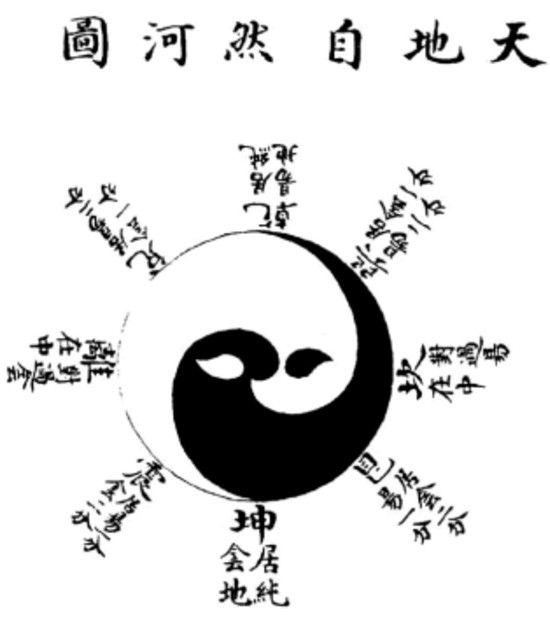
Heaven and Earth qi (天地之气 / Tiāndì zhī qì, pronounced “tyen-dee jih chee”) is the broadest xianxia categorization of ambient qi by its source: Heaven qi (天气 / tiānqì) descends from above and tends toward yang properties — light, hot, active, expansive; Earth qi (地气 / dìqì) rises from below and tends toward yin properties — dark, cool, receptive, dense. The balance between the two governs how a region cultivates, what kinds of techniques work best there, and which cultivators thrive in which environments.
What Does Heaven and Earth Qi Mean?
The phrase comes from classical Chinese cosmology, in which the universe was understood to operate through the interplay of three forces: Heaven (天 / tiān), Earth (地 / dì), and Humanity (人 / rén) — the so-called “Three Talents” (三才 / sāncái). Heaven and Earth qi are the energetic expressions of the first two; cultivators are the humanity who absorb and refine both.
Three core attributes shape how heaven and earth qi interact:
- Polarity: Heaven qi is yang, Earth qi is yin. They complement and balance each other rather than oppose.
- Mixing: Most ambient qi in a region is a mixture of heaven and earth qi, with the ratio determining the region’s character.
- Accessibility: Different cultivators have different affinities — some absorb heaven qi more efficiently, some earth, some both.
For the underlying yin-yang framework that organizes this distinction, see the culture article.
Pronunciation
| Pinyin | Tiāndì zhī qì (1st + 4th + 1st + 4th tones) |
| English approximation | “tyen-dee jih chee” |
| Chinese characters | 天地之气 (simplified), 天地之氣 (traditional) |
| Alternate translations | “qi of heaven and earth,” “cosmic qi,” “primal qi” |
Cultural Origin
The distinction appears in the Yijing (易经 / Book of Changes) and was systematized in Han dynasty cosmology. The classic Huangdi Neijing (黄帝内经) applies the distinction to medicine: human health requires balanced absorption of both heaven qi (through breathing) and earth qi (through diet). Imbalance in either direction produces specific illnesses.
Religious Daoism inherited the framework and extended it to cultivation. Daoist meditation traditionally involves drawing heaven qi down through the crown of the head (the Baihui acupoint) and earth qi up through the soles of the feet (the Yongquan acupoint), combining them in the lower dantian for refinement.
Xianxia takes this framework and applies it to the cultivator’s relationship with their environment more broadly.
How Heaven and Earth Qi Function in Xianxia
Regional Qi Composition
Different geographies have different heaven/earth qi balances:
- Mountains (especially Daoist sacred mountains): rich in heaven qi due to elevation; favor yang-aspected cultivation
- Caves and underground sects: rich in earth qi; favor yin-aspected cultivation and body refinement
- Valleys between mountains: balanced heaven/earth qi; ideal general cultivation locations
- Deserts: depleted in both; difficult cultivation environments
- Forests near water: balanced and abundant; among the genre’s preferred sect sites
- Demonic zones: corrupted earth qi; produce demonic beasts and unsuitable for orthodox cultivation
- Spiritual lands (洞天福地 / dòngtiān fúdì): rare locations where heaven and earth qi concentrate dramatically; fought over by sects
This is why xianxia sects almost always claim mountain bases — geographically defensible, qi-abundant, and aesthetically appropriate.
Cultivator Affinities
Individual cultivators have differing absorption efficiency:
- Yang-aspected cultivators absorb heaven qi more easily; do best on mountaintops, in summer, during daylight
- Yin-aspected cultivators absorb earth qi more easily; do best in caves, at night, during winter
- Balanced cultivators are rare but valuable — they progress steadily anywhere
A cultivator’s spiritual root often determines their primary affinity. Fire-root cultivators tend yang; water-root cultivators tend yin.
Technique Compatibility
Techniques themselves are categorized as heaven-aspect or earth-aspect:
- Heaven techniques: explosive, aggressive, illuminating — fireballs, lightning bolts, sword-aura strikes
- Earth techniques: defensive, regenerative, concealing — stone walls, healing pulses, illusion fields
A cultivator with strong heaven qi affinity using earth techniques wastes qi; the same cultivator using heaven techniques is far more efficient. Most cultivators specialize accordingly, with cross-aspect mastery being a sign of unusual talent.
Heaven-Earth Fusion Techniques
The most powerful xianxia techniques combine heaven and earth qi. These are typically:
- Locked behind realm thresholds (Nascent Soul and above)
- Requiring dao heart stable enough to handle mixed polarity
- Producing effects neither pure-heaven nor pure-earth techniques can match
- Often the protagonist’s signature late-novel techniques
The Daoist concept of “primordial chaos” (混沌 / hùndùn) — the unified state before yin and yang separated — is the philosophical model for fusion techniques. A cultivator who reunites heaven and earth qi within themselves approaches the dao’s primal state.
Reading Heaven-Earth Qi in a Region
Skilled cultivators can sense the heaven/earth qi ratio of a region by extending their spiritual sense. A practiced cultivator can:
- Determine the region’s overall qi richness
- Identify the dominant polarity (yang-rich, yin-rich, balanced)
- Detect localized concentrations (a particular cave or peak)
- Sense corruption (demonic taint in the earth qi, broken cycles in the heaven qi)
This sensing ability is crucial for treasure hunting, sect-site selection, and identifying spiritual lands worth fighting over.
Related Terms
- Qi — the underlying substance
- Yin and Yang — the polarity framework
- Spiritual Root — determines individual affinity
- Dantian — where the two are combined
- Spirit Stone — crystallized concentrated qi, sometimes specifically yang or yin
Common Misconceptions
“Heaven qi is good, earth qi is bad.” Neither has moral valence. They are complementary; a cultivator who absorbs only heaven qi becomes imbalanced and ill, just like one who absorbs only earth qi. Health and progression require both.
“You can only use one type.” Most cultivators specialize but all can absorb both, with varying efficiency. The genre’s strongest cultivators specifically work to broaden their affinity over time.
“Heaven qi means qi from outer space.” No. “Heaven” in this context means the sky and what’s above — atmospheric, solar, lunar, stellar influences. The heaven qi a Tang dynasty Daoist absorbed at noon is the same physical category as a xianxia cultivator’s morning meditation.
FAQ
Q: Is “heaven and earth qi” the same as “spiritual energy”?
Closely related but distinct. Spiritual energy (灵气 / língqì) typically refers to a higher-grade, rarer form of qi found in concentrated locations. Heaven and earth qi describes the polarity of any qi — including standard spiritual energy. A spiritual land might be “rich in heaven-aspected spiritual energy,” combining both descriptions.
Q: Do mortals interact with heaven and earth qi?
Yes, unconsciously. Traditional Chinese medicine holds that all humans absorb both through breathing and diet, and that imbalance causes illness. Mortals just cannot consciously direct or accelerate the process the way cultivators do.
Q: Can a region’s qi balance change?
Yes — slowly through natural cycles (seasons, dynastic eras, geological time), or rapidly through major events (a war, a tribulation, the death of a high-realm cultivator). Plots involving the corruption of a previously balanced region into demonic territory are a standard xianxia plot driver.
See Also
- Qi — the substance
- Yin and Yang — the polarity framework
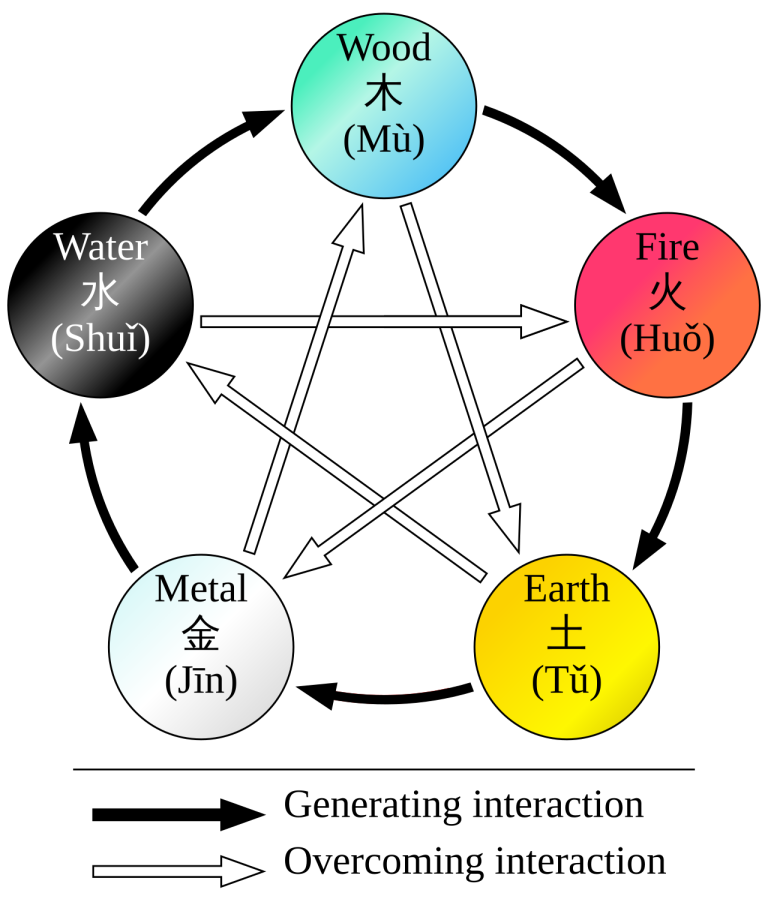
- Five Elements — the sub-elemental categorization
- Daoism in Xianxia — the philosophical tradition
Sources:
– Tian — Wikipedia
– Yin and Yang — Wikipedia
– Huangdi Neijing — Wikipedia
– Three Treasures (Traditional Chinese Medicine) — Wikipedia