The I Ching (Book of Changes) in Chinese Tradition & Xianxia
The I Ching (易经 / Yìjīng, “Classic of Changes”) is one of the oldest and most influential texts in Chinese civilization — a divination manual and philosophical work built on 64 six-line symbols called hexagrams. It has shaped Chinese cosmology, medicine, politics, art, and martial arts for over 2,500 years, and it is the direct source of the bagua (eight trigrams) that structure so much of xianxia fiction. In cultivation novels, the I Ching appears as a divination art, a formation-design framework, and occasionally a complete cultivation path.
What Is the I Ching?
The I Ching is a book, but calling it “a book” undersells it. It is:
- A divination system: You pose a question, generate a hexagram through a ritualized process (traditionally yarrow stalks, now often three coins), and interpret the result
- A cosmological map: The 64 hexagrams are understood to describe every possible situation in the universe — all combinations of six yin/yang lines
- A philosophical text: Its commentaries (especially the Ten Wings) developed a metaphysics of change that influenced Confucianism, Daoism, and Neo-Confucianism
The core structure is elegant:
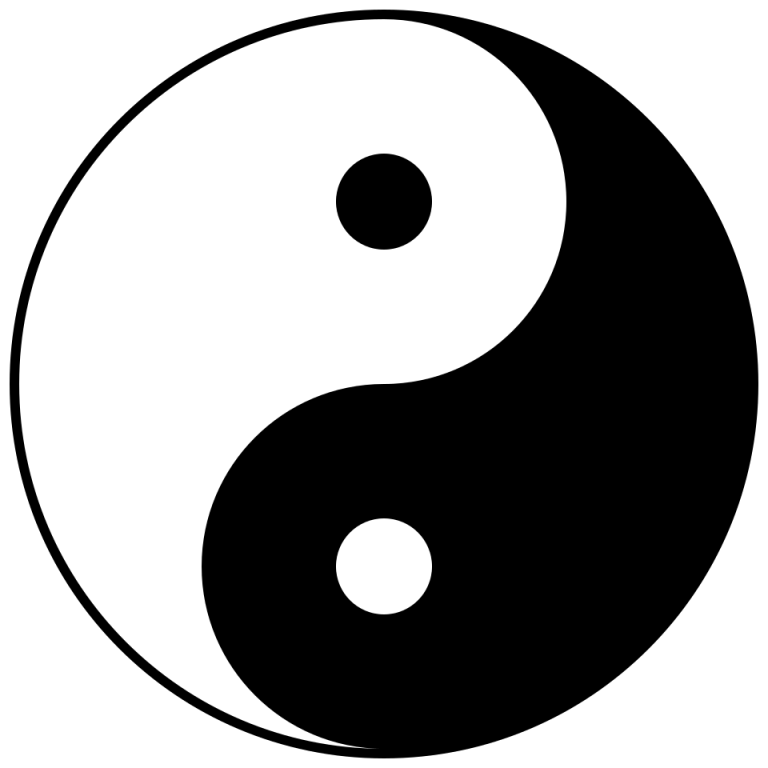
Taiji (太极) → Yin-Yang (阴阳) → 4 digrams → 8 trigrams (八卦) → 64 hexagrams (六十四卦)
Each hexagram has six lines, each line either solid (yang, ⚊) or broken (yin, ⚋). Two trigrams stacked produce one hexagram. Six binary choices produce 2⁶ = 64 possibilities — the complete set.
Pronunciation
| Pinyin | Yìjīng (4th tone + 1st tone) |
| English approximation | “ee-jing” |
| Simplified Chinese | 易经 |
| Traditional Chinese | 易經 |
| Common English names | I Ching, Book of Changes, Yijing, Zhouyi (周易) |
“易” (yì) means “change” or “exchange”; “经” (jīng) means “classic” or “canonical text.” The alternative name 周易 (Zhōuyì, “Zhou Changes”) refers to the Zhou dynasty version that became canonical.
Historical Origin
Layer 1: Shang Dynasty Divination (~1200 BCE)
The I Ching’s deepest roots are in oracle bone divination during the Shang dynasty (c. 1600–1046 BCE). Shang diviners heated cattle bones and turtle shells, then read the cracks to determine the will of ancestral spirits and gods. Thousands of these oracle bones survive, covered in questions about harvests, warfare, births, and weather.
Layer 2: The Zhou Codification (~1000–750 BCE)
The Zhou dynasty replaced the Shang around 1046 BCE and systematized divination into a text. The Zhouyi (“Changes of Zhou”) organized divination around 64 hexagrams with brief judgments (卦辞 guàcí) and line-by-line texts (爻辞 yáocí). This is the oldest layer of the text we have.
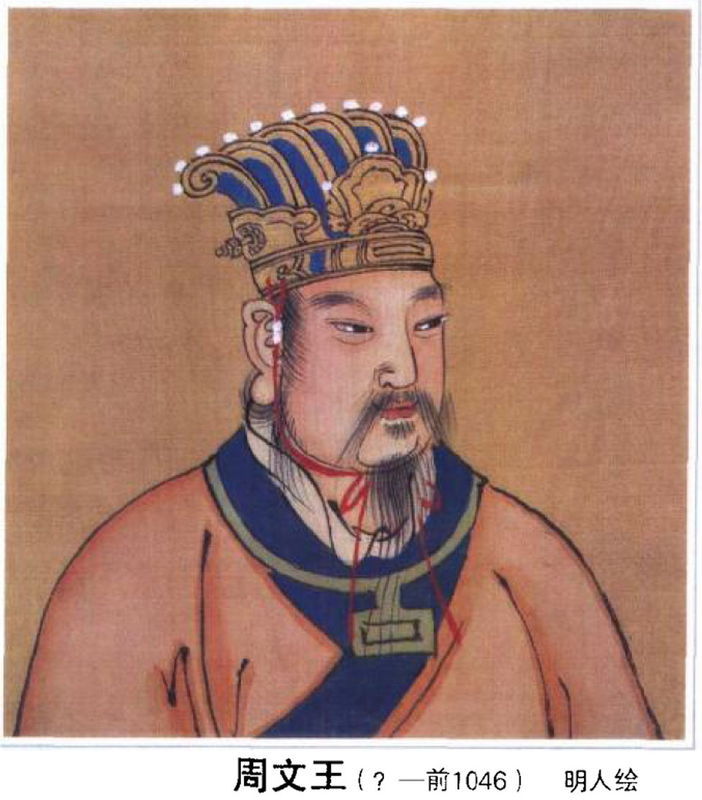
The traditional narrative attributes the hexagrams to Fuxi (伏羲, a mythological culture hero), the judgments to King Wen of Zhou (周文王, c. 1152–1056 BCE, who reportedly composed them while imprisoned), and the line texts to his son the Duke of Zhou (周公). Scholars now treat these attributions as legendary origin stories rather than reliable history — the text is the product of many hands over centuries.
Layer 3: The Ten Wings (Warring States to Han, ~5th–2nd century BCE)
The Ten Wings (十翼 Shíyì) are philosophical commentaries appended to the core text. Tradition attributes them to Confucius; modern scholarship sees multiple authors across the Warring States and early Han periods. The Ten Wings turned a divination manual into a work of metaphysics, explaining how the hexagrams encode the structure of reality.
The most important — the Great Treatise (系辞传 Xìcí Zhuàn) — contains the famous statement:
“易有太极,是生两仪,两仪生四象,四象生八卦”
“In the Changes there is the Taiji, which produces the Two Modes [yin and yang]; the Two Modes produce the Four Images; the Four Images produce the Eight Trigrams.”
This passage is the earliest textual basis for the cosmological cascade that xianxia inherits: Wuji → Taiji → yin-yang → bagua → everything else.
Layer 4: Imperial Canon and Global Spread
The I Ching became one of the Five Classics (五经) of the Confucian canon in the Han dynasty and remained required reading for the imperial civil service exams for centuries. It also became foundational to Daoist alchemy, Chinese medicine, feng shui, and military strategy.
In the 17th century, Jesuit missionaries brought the I Ching to Europe. Leibniz recognized its hexagrams as binary numbers (1687), and the text influenced Western thinkers from Jung (who wrote a famous commentary on synchronicity) to John Cage (who used the I Ching to compose chance-based music).
Core Structure
The Eight Trigrams (八卦)
| Trigram | Chinese | Name | Image | Lines (bottom→top) |
|---|---|---|---|---|
| ☰ | 乾 | Qián | Heaven | yang yang yang |
| ☱ | 兑 | Duì | Lake | yang yang yin |
| ☲ | 离 | Lí | Fire | yang yin yang |
| ☳ | 震 | Zhèn | Thunder | yang yin yin |
| ☴ | 巽 | Xùn | Wind | yin yang yang |
| ☵ | 坎 | Kǎn | Water | yin yang yin |
| ☶ | 艮 | Gèn | Mountain | yin yin yang |
| ☷ | 坤 | Kūn | Earth | yin yin yin |
The 64 Hexagrams (六十四卦)
Stacking two trigrams gives a hexagram. Each hexagram has:
- A name (e.g., 乾 Qián — “The Creative,” 坤 Kūn — “The Receptive”)
- A judgment (卦辞): a brief statement about the situation
- Six line texts (爻辞): specific guidance for each of the six stages
- Commentary from the Ten Wings
The 64 hexagrams are traditionally arranged in two orders:
- King Wen sequence (the standard order): a paired, non-binary arrangement used in divination
- Fuxi order (binary sequence): a perfect binary count from 0 to 63, which is what Leibniz noticed
How the I Ching Works in Real Chinese Culture
Divination Practice
The traditional method uses 50 yarrow stalks in an elaborate process that generates one hexagram over roughly 20 minutes. The modern method uses three coins tossed six times. Either way, the user poses a question and interprets the resulting hexagram’s text and commentary as guidance.
The I Ching is not treated as fortune-telling in the “predict the lottery numbers” sense. Classical interpreters emphasize that it reveals the nature of a situation and the attitude appropriate to it — advice rather than prophecy.
Philosophy and Self-Cultivation
Confucian scholars used the I Ching as a tool for ethical self-examination. Song dynasty Neo-Confucians (Zhou Dunyi, Zhu Xi) built their metaphysics on it. Zhu Xi wrote one of the most influential commentaries (Zhouyi Benyi), which remained standard for 700 years.
Traditional Chinese Medicine
TCM practitioners historically used the I Ching to analyze patterns of imbalance. The 64 hexagrams map onto diagnostic categories in classical texts, and some acupuncture traditions organize point selection by hexagram correspondences.
Martial Arts and Internal Alchemy
- Baguazhang (八卦掌) is structured around the eight trigrams — its circle-walking practice maps the practitioner’s movement onto the trigram positions
- Taijiquan theoretically embodies the taiji → yin-yang → bagua progression
- Daoist internal alchemy (内丹) texts regularly quote the I Ching to explain qi circulation stages
Contemporary Presence
The I Ching remains widely used in Hong Kong and Taiwan for business decisions, in Chinese medicine training, in feng shui practice, and in Western心理咨询-style self-reflection. It is one of the few ancient Chinese texts still consulted for practical decisions by millions.
How Xianxia Novels Use the I Ching
Divination as a Cultivation Discipline
Some novels feature divination cultivators (算修 / suànxiū, “calculation cultivators”) who use hexagram-based techniques to:
- Foresee enemy movements before battle
- Identify the location of hidden treasures
- Detect hidden threats and betrayals
- Calculate the “fate” of a sect or dynasty
These characters are often treated as strategically vital — a single divination master can change a war’s outcome. They’re also frequently targeted first, since their foresight makes them dangerous.
Hexagram Formations (卦阵)
The 64 hexagrams are used as formation structures:
- An eight-trigram formation (八卦阵) moves through the 8 trigram positions
- A 64-hexagram formation (六十四卦阵) uses all 64 configurations, requiring 64 nodes and usually a massive array of spirit stones
- Breaking a hexagram formation requires either overwhelming force or calculating which hexagram the opponent is currently in and finding its “opposing” hexagram
The 64-hexagram formation is the genre’s standard “ancient grand array” that takes an entire sect to maintain.
Fate and Destiny Calculation
Xianxia frequently uses the I Ching’s concept of fate calculation (算命 / suànmìng):
- A cultivator calculates the “fate line” (命线) of a target
- They can determine remaining lifespan, destined enemies, or karmic debts
- Powerful cultivators can even “change fate” (改命) — altering destiny at a cost
This connects to the I Ching’s philosophical claim that the hexagrams reveal the shape of a situation, including its trajectory.
Hexagram-Based Techniques
Some novels invent specific techniques based on individual hexagrams:
- 乾 (Qián / Heaven): overwhelming yang force, pure offense
- 坤 (Kūn / Earth): absolute defense, boundless endurance
- 坎 (Kǎn / Water): flowing, adaptive attacks
- 离 (Lí / Fire): burning, illuminating attacks
- 震 (Zhèn / Thunder): explosive, sudden power
A cultivator who has “mastered all 64 hexagrams” is typically a top-tier figure — comparable to someone at the Soul Formation or higher realms.
The I Ching as a Cultivation Manual
A few novels treat the I Ching itself as an ancient cultivation manual whose lines encode a complete technique. The protagonist might:
- Discover that the original text has hidden cultivation instructions
- Realize the hexagram sequence encodes a meditation path
- Find that specific hexagrams, when “read” as body positions, form a martial art
This is a favorite plot device because it lets authors reference mainstream Chinese culture while inventing their own lore.
Common Misconceptions
“The I Ching is just fortune-telling.” It is used for divination, but its classical interpreters (Confucius’s school, Zhu Xi) treated it primarily as a tool for understanding situations and cultivating wisdom. Many users consult it as a decision-support and self-reflection tool rather than as a prediction machine.
“The I Ching is the same as Daoism.” It predates organized Daoism and is equally foundational to Confucianism (it’s one of the Five Confucian Classics). Its metaphysics influenced both traditions. Attributing it exclusively to Daoism is a common Western mistake.
“The hexagrams are 64 random symbols.” They are systematically generated from the eight trigrams (2³ = 8) stacked in pairs (8² = 64). The system is combinatorial, not random — every possible combination of six yin/yang lines is represented exactly once.
“The I Ching was written by one person.” It accumulated over roughly 1,000 years: Shang divination practices, Zhou dynasty codification, the Ten Wings commentaries, and countless later interpretive layers. The traditional attribution to Fuxi/King Wen/Duke of Zhou/Confucius is a legendary compression of a collective process.
FAQ
Q: Do you need to memorize all 64 hexagrams to use the I Ching?
Traditional practitioners often do, but most users consult a reference. The standard practice is to cast a hexagram, then look up its name, judgment, line texts, and commentary. Many English translations and apps exist — the classic is Richard Wilhelm’s 1923 German translation (rendered into English by Cary Baynes) with Carl Jung’s foreword.
Q: Why does the I Ching use binary-looking symbols?
Because it literally is binary: each line is one bit (yin=0, yang=1). Six lines = six bits = 64 values. Leibniz noticed this in 1687 and recognized a kinship with his own binary arithmetic. Whether the ancient Chinese authors thought of it as “binary math” is debatable — they thought of it as the structure of reality.
Q: Is consulting the I Ching compatible with a scientific worldview?
Practitioners and scholars differ. Classical Chinese thought treats the I Ching as a description of reality’s structure rather than a supernatural oracle. Some modern users approach it as a structured prompt for reflection (like Tarot). The text’s practical value lies in making you think about your situation from multiple angles, which works whether or not you believe the hexagrams are metaphysically real.
Q: How different is the xianxia version from the real text?
Significantly. Xianxia literalizes the I Ching into “hexagram formations,” “fate calculation,” and “hexagram techniques” — none of which are in the original text. Real I Ching practice is textual interpretation, not casting hexagram blasts at enemies. As always in xianxia, the vocabulary is authentic, the application is invented.
Further Reading
- I Ching — Wikipedia
- Hexagram (I Ching) — Wikipedia
- Richard Wilhelm’s I Ching translation on Amazon — the standard English edition since 1950
- I Ching Online — free digital casting tool
- Smith, Richard J. The I Ching: A Biography. Princeton University Press, 2012 — the best modern scholarly history
See Also
- Bagua (Eight Trigrams) — the eight trigram system the I Ching is built on
- Taiji — the supreme ultimate that produces the two modes
- Wuji — the void before differentiation
- Yin and Yang — the two modes of the I Ching
- Five Elements — the other foundational Chinese cosmology system
- Daoism in Xianxia — the tradition that adopted the I Ching
- Neidan — internal alchemy, which quotes the I Ching extensively
- Dao — the cosmic principle underlying the Changes
Sources:
– I Ching — Wikipedia
– Hexagram (I Ching) — Wikipedia
– Bagua — Wikipedia
– Zhou Dunyi — Wikipedia
– Zhu Xi — Wikipedia
– Leibniz’s binary and the I Ching — Wikipedia
– Smith, Richard J. The I Ching: A Biography. Princeton University Press, 2012.
– Wilhelm, Richard (trans.). The I Ching or Book of Changes. Princeton University Press, 1950.