Insight in Xianxia: The Sudden Comprehension That Breaks Bottlenecks
Insight (顿悟 / Dùnwù, pronounced “doon-woo”) is the sudden flash of understanding that lets a cultivator grasp a new layer of dao and break through a bottleneck that years of grinding could not crack. Where qi accumulation can be planned and treasures can be hunted, insight cannot be forced — it strikes when the cultivator is ready, often in the middle of an unrelated activity, and may not strike at all. The pursuit of insight, and the cultivator’s vulnerability while experiencing one, drive a large fraction of xianxia drama.
What Does Insight Mean?
The Chinese dùnwù combines dùn (顿, “sudden”) and wù (悟, “to realize, awaken, understand”). Together it means “sudden realization” — a flash of comprehension distinct from gradual learning. The word comes directly from Chinese Buddhist tradition, specifically the Chan (Zen) school’s doctrine of sudden enlightenment (顿悟 / dùnwù), where a practitioner could attain liberation in a single moment rather than through gradual cultivation.
Xianxia takes this Buddhist concept and applies it to cultivation generally: insight is when the universe momentarily aligns so a cultivator can comprehend something they could not before. The genre’s typical pattern:
- A cultivator has been training a technique or seeking dao understanding for years without breakthrough
- Something triggers a shift — observing falling water, hearing a phrase, surviving a battle, witnessing nature
- Time appears to slow or stop for the cultivator
- They suddenly see the principle they could not see before
- Their cultivation advances dramatically — sometimes a realm, sometimes deeper dao comprehension
For the broader dao framework insight operates within, see the main dao entry.
Pronunciation
| Pinyin | Dùnwù (4th tone + 4th tone) |
| English approximation | “doon-woo” |
| Chinese characters | 顿悟 (simplified), 頓悟 (traditional) |
| Alternate translations | “enlightenment,” “sudden realization,” “epiphany,” “comprehension” |
Buddhist contexts typically translate dùnwù as “sudden enlightenment.” Xianxia translations more commonly use “insight” or “comprehension” to avoid the religious connotations.
Cultural Origin
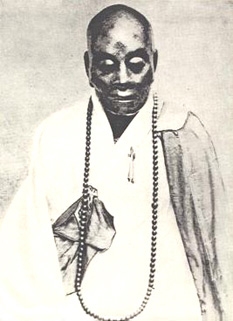
The doctrine of sudden enlightenment is central to the Chan (Chinese Zen, 禅宗) school of Buddhism. Its great theorist, Huineng (慧能, 638–713 CE), the Sixth Patriarch of Chan, argued that enlightenment was a single event of recognition rather than the result of accumulated practice. His position was distinguished from the “Northern School” of gradual cultivation championed by Shenxiu (神秀).
The sudden/gradual debate occupied Chinese Buddhism for centuries. The sudden position eventually became dominant in Chan, and the concept of dùnwù spread beyond Buddhism into Chinese thought generally — used in Daoism, in literary criticism (the “sudden grasping” of a poem’s meaning), and in martial arts (the moment a technique becomes natural) (Wikipedia: Subitism).
Xianxia inherits all of this. The genre’s insight scenes are recognizably descended from Chan accounts of monks attaining enlightenment under specific triggers — the falling of a tile, the sight of plum blossoms, the sound of a temple bell.
How Insight Works in Xianxia
Triggers
Insight is triggered by some combination of:
- Years of preparation: The cultivator must have done the slow work first. Insight rewards readiness, not laziness.
- A sensory or emotional event: Watching a sword strike, witnessing a death, hearing music, feeling deep love or grief. The event itself doesn’t matter — what matters is that something cracks the cultivator’s habituated perception.
- Proximity to a higher dao: Being near a master mid-comprehension, or near a heaven-tier treasure, can transmit insight by resonance.
- Tribulation aftermath: Surviving a tribulation often produces immediate insight, as the cultivator’s faculties are heightened by the experience.
The Insight State
When insight strikes, the cultivator enters a distinct state described consistently across novels:
- They are oblivious to their surroundings — eyes open but unfocused
- Their qi circulates spontaneously, often at extraordinary speed
- They cannot defend themselves; they are at most physically still
- The insight lasts anywhere from minutes to days
This state is the cultivator’s most vulnerable moment. An enemy who catches a rival in mid-insight can kill them with minimal effort. Conversely, an ally who recognizes a cultivator in insight will guard them, sometimes for days, to ensure they emerge safely.
Insight Levels
Insights vary in magnitude:
- Minor insight: A small realization that improves one specific technique
- Realm insight: Sufficient to enable a breakthrough to the next cultivation realm
- Dao insight: Deep comprehension of a specific dao, often jumping the cultivator’s percentage understanding by 10–30%
- Heavenly Dao insight: The rarest — direct comprehension of the Heavenly Dao itself. Usually reserved for the protagonist’s late-novel breakthroughs.
What Cannot Be Insight
Insight is for understanding, not for resources. A cultivator cannot have insight that produces spirit stones, treasures, or techniques they didn’t know. Insight only deepens what the cultivator was already partially seeing.
Insight in Sect Strategy
Because insight is so valuable and unpredictable, sects develop strategies around it:
Insight Chambers
Specially designed meditation spaces that amplify ambient qi and reduce distractions, increasing the probability of insight. Sects guard access to these chambers carefully.
Insight Stones / Dao Stones
Rare treasures that contain the “echoes” of a previous master’s insight. Cultivators who meditate on such stones can experience derivative insights, never as deep as the original but useful for breaking specific bottlenecks.
Protection Duty
When a sect master enters insight, junior cultivators are assigned to guard them. This is treated as a sacred duty — failure to protect a master in insight is a serious offense.
Insight Pursuit
Some cultivators deliberately travel, observe, or seek out experiences they believe might trigger insight. This often becomes a side quest in xianxia plots — the protagonist visits a famous waterfall, a sacred mountain, or an ancient battlefield specifically hoping to gain insight.
Related Terms
- Dao — the framework insight illuminates
- Dao Heart — strong dao heart enables clearer insight
- Heavenly Dao — the highest level of insight
- Tribulation — often triggers post-event insight
- Cultivation Realms — the system insight helps cultivators advance through
Common Misconceptions
“Insight can be trained.” Partially. The work that precedes insight can be done. The insight event itself cannot — that is its defining feature.
“Insight is the same as just being smart.” Intelligence helps prepare for insight but doesn’t replace it. A brilliant cultivator who has accumulated no dao comprehension is as far from insight as a dull one. Insight comes from depth, not cleverness.
“Insight always produces breakthrough.” A minor insight may just deepen comprehension without immediate realm advancement. The dramatic “I broke through to Nascent Soul from insight” moments are the genre’s exceptions, not its rule.
FAQ
Q: Can a cultivator have multiple insights in one lifetime?
Yes, and most do. Cultivation involves dozens of insights of varying magnitudes across centuries. The famous dramatic ones in fiction are the realm-changing or dao-changing variants; the everyday minor insights are routine.
Q: What happens if insight is interrupted?
In most novels, the cultivator loses the insight permanently — they cannot resume from where they were. This is what makes interruption so devastating. A few novels allow partial preservation through specific techniques, but the default is full loss.
Q: Does insight only happen during meditation?
No. The most famous insights in xianxia come during ordinary activities — walking, fighting, observing a sunset. The triggering condition is internal readiness, not external position. Many cultivators specifically leave their meditation chambers because they have realized insight is more likely while their conscious mind is engaged with the world.
See Also
- Dao, Heavenly Dao, Dao Heart — the framework insight illuminates
- Cultivation Realms Explained — how insight enables realm transitions
- Daoism in Xianxia — the philosophical tradition behind sudden enlightenment
Sources:
– Subitism — Wikipedia
– Huineng — Wikipedia
– Chan Buddhism — Wikipedia
– Platform Sutra — Wikipedia