Sect Explained: How Martial Schools Work in Wuxia & Xianxia
A sect (宗 / Zōng or 派 / Pài, pronounced “zong” or “pai”) is the organized martial school or cultivation school that serves as the structural building block of both the wulin (in wuxia) and the cultivation world (in xianxia). Every disciple belongs to a sect; every sect has a founding master, a transmission lineage, signature techniques, and a position in the broader hierarchy of martial or cultivator society. The sect is where xianxia and wuxia stories spend most of their time.
What Does Sect Mean?
Chinese distinguishes several terms English typically renders as “sect”:
- Zong (宗) — usually translates as “school” or “sect”; emphasizes the founder-lineage
- Pai (派) — usually translates as “school” or “faction”; emphasizes the style or branch
- Men (门) — literally “gate”; emphasizes a closed community
- Jiao (教) — usually translates as “religion” or “doctrine”; emphasizes belief
- Bang (帮) — usually translates as “gang” or “guild”; emphasizes loose association
Most English translations of wuxia and xianxia simply use “sect” for any of these, sometimes adding “school” or “clan” for variety. The distinctions matter in Chinese but rarely affect the plot.
A sect has these core features:
- A founding figure — historical or mythological master who established the lineage
- A core technique or doctrine — the sect’s signature method
- A geographic base — usually a mountain, temple, or specific region
- A hierarchy of members — sect master, elders, inner disciples, outer disciples
- A reputation — orthodox or unorthodox, respected or feared
Pronunciation
| Pinyin (zong) | Zōng (1st tone) |
| Pinyin (pai) | Pài (4th tone) |
| English approximation | “zong” / “pie” |
| Chinese characters | 宗 (zong), 派 (pai), 门 (men), 教 (jiao), 帮 (bang) |
When translators want to preserve the distinction, “Heavenly Sword Sect” (天剑宗) uses zong, while “Mei School” (峨眉派) uses pai. The choice is conventional rather than philosophical.
How Sects Work in Wuxia
In wuxia novels, sects are martial schools — communities organized around shared techniques and master-disciple lineages. The largest are real or fictional analogs of historical institutions:
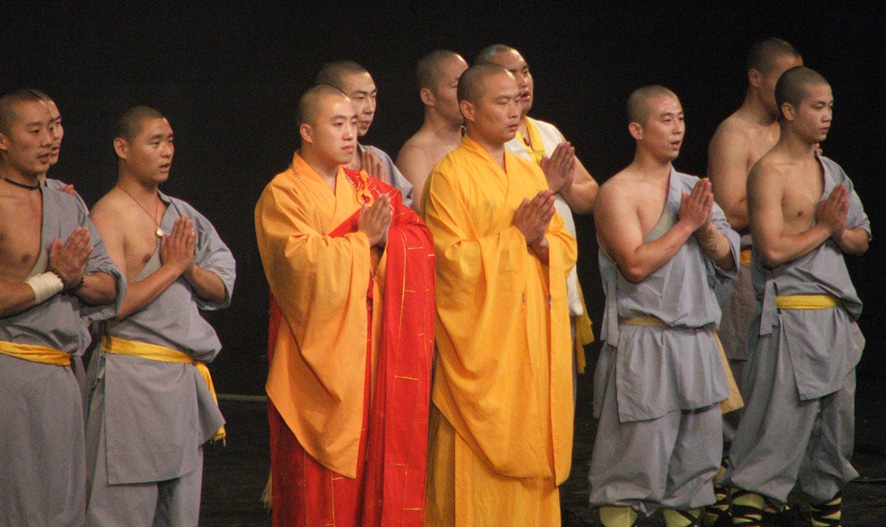
- Shaolin Sect (少林派) — Buddhist warrior monks, often the moral anchor of the wulin
- Wudang Sect (武当派) — Daoist internal martial arts, especially the sword
- Emei Sect (峨眉派) — female-led, associated with Sichuan’s Mount Emei
- Kunlun Sect (昆仑派) — northwestern, sometimes neutral, sometimes Daoist
- Quanzhen Sect (全真派) — historical Daoist religious order, with martial branches
In Jin Yong’s The Smiling, Proud Wanderer, the major sects compete and ally with each other in ways that resemble medieval feudal politics. The protagonist navigates these alliances; the plot turns on which sects support which factions.
How Sects Work in Xianxia
Xianxia inflates the sect concept dramatically. A xianxia cultivation sect:
- Owns its mountain or domain — sometimes literally a sub-realm or spatial pocket
- Has thousands of disciples organized in formal inner-outer hierarchies
- Controls economic resources including spirit stone mines, alchemy gardens, treasure vaults
- Maintains political alliances with other sects across continents
- Trains disciples over centuries — high-level sect members may have served for 500+ years
- Operates by realm-tier governance — Mahayana ancestors decide, Nascent Soul elders manage, Core Formation disciples execute
The typical xianxia sect structure:
| Rank | Realm | Role |
|---|---|---|
| Sect Ancestor / Founder | Mahayana or above | Hidden, advisory |
| Sect Elder | Nascent Soul | Strategic decisions |
| Peak Master | Core Formation | Daily operations of sub-departments |
| Inner Disciple | Foundation Establishment | Skilled members with resources |
| Outer Disciple | Qi Refining | Probationary, low-resource |
| Servant Disciple | Pre-cultivation | Support staff |
The protagonist almost always enters as an outer disciple and climbs the hierarchy. The internal politics of the sect — competition among peak masters, factional alliances, the favorite-disciple system — drive much of the genre’s plot.
Sect Dynamics
Several recurring patterns in sect-based stories:
Inner-Outer Disciple Tension
Inner disciples receive better techniques, more resources, and direct master attention. Outer disciples are often left to fend for themselves. The protagonist usually starts outer and must work or fight their way inner.
The Genius Disciple
A young, exceptionally talented disciple becomes the sect’s pride. They are often the sect’s hope for the next generation. Protagonists frequently compete with or are the genius disciple.
Sect Tournaments
Internal tournaments (between disciples) and external tournaments (between sects) are recurring set pieces. They function as both training and political display.
Sect Defenses
Sect grounds are protected by ancient formations, spiritual sense wards, and patrolling Nascent Soul elders. Attacks on a sect are major plot events.
Sect Betrayals
A disciple who leaves their sect under poor terms is ostracized from the broader cultivation community. A sect that betrays its allies loses face permanently. The unspoken rules about sect loyalty are stricter than the spoken ones.
Sect-Less Cultivators
Not every cultivator belongs to a sect. Wandering cultivators (散修 / sǎnxiū) operate independently — see the wandering hero entry. They have more freedom but fewer resources, no protection during tribulation, no inherited techniques, and lower social standing. The trade-off recurs across the genre.
Related Terms
- Wulin — the broader martial community sects belong to
- Jianghu — the wider social world including sects
- Cultivation Realms — the realm hierarchy that determines sect roles
- Wandering Hero — the cultivator without a sect
- Orthodox vs Unorthodox — the major split between sect alignments
Common Misconceptions
“All sects are religious.” Some are — Shaolin (Buddhist) and Quanzhen (Daoist) sects in wuxia have religious doctrines. But most fictional sects are martial or cultivation-focused with no specific religious component. The “Heavenly Sword Sect” or “Burning Sky Pavilion” of generic xianxia is closer to a powerful family business than a temple.
“Sects always last for centuries.” In fiction, yes — the long-lived nature of cultivators means sects span millennia. In reality, most Chinese martial schools have shorter histories than fiction suggests.
“Joining a sect means giving up your name.” Some sects rename their disciples (especially Buddhist sects), but most allow members to retain their original names while adopting sect titles for official use.
FAQ
Q: Can a cultivator switch sects?
It is possible but heavily complicated. The original sect’s permission is required for honorable departure; without it, the cultivator becomes a renegade. The new sect must accept them, which typically requires demonstrating value — often a treasure, technique, or sworn oath.
Q: How big is a typical xianxia sect?
The genre runs the full range. A small sect might have 100 disciples; a major sect like the “Heavenly Sword Sect” in many novels has 10,000+. Mega-sects with tens of millions of members appear in higher-realm stories.
Q: Why are sects always on mountains?
Because Chinese spiritual tradition associates mountains with concentrated qi and spiritual purity. Real Daoist and Buddhist monasteries are typically located on mountains for the same reason. Xianxia inherits the convention literally — mountain qi is presented as a real geographical factor that accelerates cultivation.
See Also
- Wulin, Jianghu — the broader social worlds
- Cultivation Realms Explained — the realm hierarchy used by xianxia sects
- Wuxia vs Xianxia vs Xuanhuan — sect mechanics differ across subgenres
Sources:
– Wuxia — Wikipedia
– Shaolin Monastery — Wikipedia
– Wudang Mountains — Wikipedia
– Quanzhen School — Wikipedia