Wandering Hero in Wuxia: The Sect-Less Martial Artist Archetype
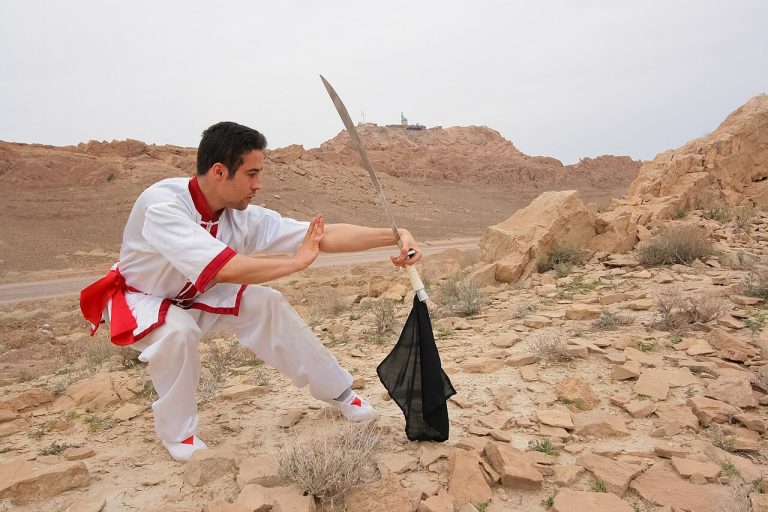
A wandering hero (游侠 / Yóuxiá, pronounced “yoh-shyah”) is a martial artist who operates without sect affiliation or fixed home, traveling from place to place and intervening in injustices they encounter. It is one of the oldest and most beloved archetypes in Chinese fiction, predating the modern wuxia genre by two thousand years. The wandering hero is the purest expression of the xia archetype — skill, code, and independence in their most uncompromised form.
What Is a Wandering Hero?
A wandering hero is defined by three negative attributes — what they don’t have — and three positive ones — what they do have.
Don’t have:
– No sect or organizational loyalty
– No fixed residence or geographic anchor
– No employer or fixed source of income
Do have:
– Personal martial skill
– A personal code (often the xia code)
– Willingness to act on that code in any situation they encounter
The Chinese phrase yóuxiá combines yóu (游, “to roam”) and xiá (侠, “chivalrous hero”). The “roaming” part is essential — a wandering hero who settles down is no longer a wandering hero, even if they retain all the other attributes.
For the broader xia archetype this character belongs to, see Xia.
Pronunciation
| Pinyin | Yóuxiá (2nd tone + 2nd tone) |
| English approximation | “yoh-shyah” |
| Chinese characters | 游侠 (simplified), 遊俠 (traditional) |
| Common translations | “wandering hero,” “knight-errant,” “roving martial artist” |
The English “knight-errant” is the closest existing Western equivalent — a wandering knight without a lord — but the Chinese xia framework differs from European chivalry in ways that resist exact translation. The term “wandering hero” is the standard in modern English wuxia translations.
Cultural Origin
The historian Sima Qian (司马迁, c. 145–86 BCE) documented real wandering hero figures in his Records of the Grand Historian (史记). Among them was Zhu Jia (朱家), a Han dynasty figure who sheltered fugitives, repaid kindnesses without thanks, and lived modestly despite the prestige he attracted. Sima Qian’s framing of these figures — admirable but politically destabilizing, virtuous but legally suspect — established the archetype’s enduring ambivalence.
The Tang dynasty (618–907) produced wandering hero fiction in the chuanqi (传奇) tradition. Tang wandering heroes are often supernatural — sword spirits, masters who can fly, women who emerge from rivers to dispense justice. This is where the archetype begins shading toward what would become xianxia.
The Ming dynasty’s Water Margin (水浒传) is essentially a community of 108 wandering heroes. Each of the outlaws has a chapter that establishes their xia credentials before they join the larger bandit-utopia. The structure shows the wandering hero archetype as social as well as individual.
Modern wuxia inherits all of this. Jin Yong, Gu Long, and other 20th-century wuxia masters frequently center their stories on wandering heroes, with sect-based stories as the alternative.
The Wandering Hero in Wuxia
In wuxia novels, wandering heroes typically:
- Travel light: A sword, a horse, a small purse, sometimes a flute or a wine gourd
- Pay their way with skill: Bounty hunting, escort missions, occasional employment by friendly officials
- Carry past trauma: Most wandering heroes are wandering because something happened — a sect destroyed, a love lost, a master betrayed
- Have a destination they avoid: A village they cannot return to, a person they cannot face, a debt they cannot pay
- Eventually settle (or die): The genre’s standard endings; a wandering hero who reaches old age has either found a home or died in motion
Gu Long’s Wandering Heroes
The author Gu Long (古龙, 1938–1985) is perhaps the genre’s greatest writer of wandering heroes. His novels — Sentimental Swordsman, Ruthless Sword (多情剑客无情剑) and The Eleventh Son (萧十一郎) — feature wandering heroes who are lonely, witty, alcoholic, brilliant, and often dying of unspecified illnesses. Gu Long’s wandering heroes carry the weight of the archetype’s full history and emotional cost.
Jin Yong’s Wandering Phases
In Jin Yong’s work, wandering hero status is often a phase rather than a permanent identity. Yang Guo in The Return of the Condor Heroes wanders for years before settling. Linghu Chong in The Smiling, Proud Wanderer moves between sect and wandering states. Jin Yong uses the wandering phase to develop characters before grounding them again.
The Wandering Hero in Xianxia
Xianxia adapts the archetype as the wandering cultivator (散修 / sǎnxiū), a cultivator without sect affiliation. The structural position is identical: no organizational protection, no inherited techniques, more freedom, more risk.
In xianxia, wandering cultivators face specific disadvantages:
- No pill supply: Foundation Establishment and higher breakthrough pills come from sect alchemy gardens; wandering cultivators must find or buy them
- No tribulation support: A sect can mobilize elders to support a disciple’s tribulation; a wandering cultivator faces it alone
- No technique transmission: Most techniques are sect secrets; wandering cultivators rely on what they can find or invent
- Lower social rank: At sect gatherings, wandering cultivators are treated as lesser, regardless of their realm
But wandering cultivators have advantages:
- No sect loyalty conflicts: They cannot be ordered against their will
- Freedom of movement: They can pursue resources sects cannot reach
- Unconstrained dao: They can develop techniques the sect orthodoxy would forbid
The most respected wandering cultivators in fiction — Han Li in A Record of a Mortal’s Journey to Immortality spent significant arcs as a wandering cultivator — are usually those who succeed despite the disadvantages.
Famous Wandering Heroes
- Hongxian (红线) — Tang dynasty supernatural female wandering hero in chuanqi tales
- Wu Song (武松) — Water Margin tiger-killer and outlaw
- Li Xunhuan (李寻欢) — Gu Long’s Sentimental Swordsman, Ruthless Sword; the genre’s most famous melancholy wandering hero
- Yang Guo (杨过) — Jin Yong; wandering hero by circumstance for much of Return of the Condor Heroes
- Han Li (韩立) — A Record of a Mortal’s Journey to Immortality; xianxia’s most famous wandering cultivator
Related Terms
- Xia — the heroic archetype wandering heroes embody most purely
- Jianghu — the social world wandering heroes inhabit
- Wulin — the martial community wandering heroes don’t formally belong to
- Sect — the organization wandering heroes don’t have
Common Misconceptions
“Wandering heroes are always loners.” Many are, but the archetype allows for traveling companions — a sworn brother, a love interest, a young disciple. The wandering hero’s defining negative is the lack of organizational attachment, not personal connections.
“Wandering heroes have no resources.” They have what they carry plus what they earn. Famous wandering heroes accumulate considerable treasures and reputations over time. The contrast with sect membership is about institutional resources, not personal poverty.
“The wandering hero archetype is purely Chinese.” The archetype has analogs in many traditions — European knight-errants, Japanese ronin, American Western gunslingers, Russian Cossack figures. The specifics differ, but the structural position — a skilled outsider with a personal code — recurs in cultures with strong feudal-era organized power.
FAQ
Q: How does a wandering hero earn money?
Several standard methods: bounty hunting (killing bandits for reward), escort work (protecting merchant caravans), occasional employment by sympathetic officials, finding treasures, accepting gifts for services. Some wandering heroes also have inherited wealth they slowly spend through their travels.
Q: Why do wandering heroes carry flutes or wine?
The flute is a refined martial weapon and a marker of cultural sophistication. A wandering hero who plays the flute signals education and self-cultivation beyond raw martial skill. The wine gourd signals indifference to social respectability — a willingness to live outside Confucian propriety.
Q: Can a wandering hero settle down?
Yes, and the genre often treats this as the natural ending. A wandering hero who finds love, family, or a worthy cause may settle. Whether this is a happy ending or the death of the archetype is the question different authors answer differently.
See Also
- Xia — the heroic archetype
- Jianghu, Wulin — the social worlds
- Sect — the organizational counterpoint
Sources:
– Youxia — Wikipedia
– Wuxia — Wikipedia
– Records of the Grand Historian — Wikipedia
– Water Margin — Wikipedia
– Hamm, John Christopher. Paper Swordsmen: Jin Yong and the Modern Chinese Martial Arts Novel. University of Hawai’i Press, 2005.